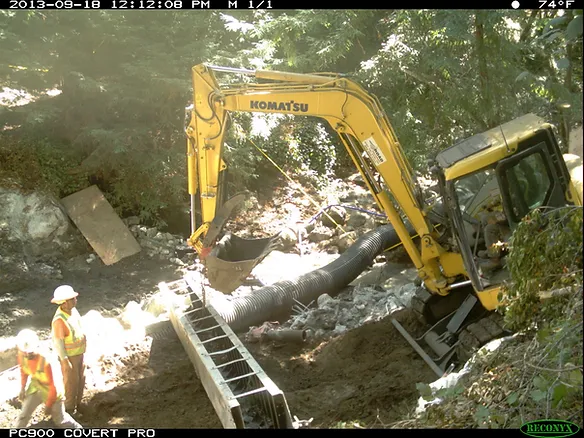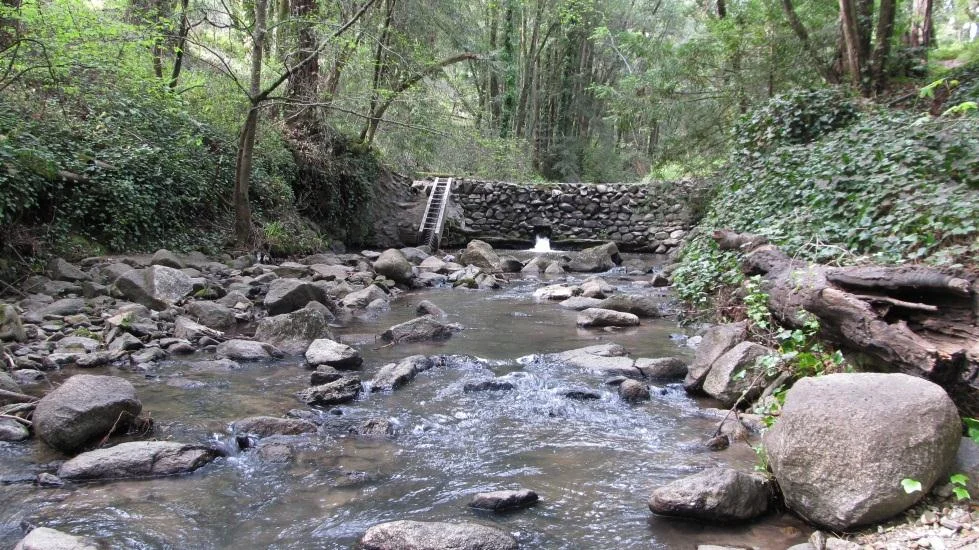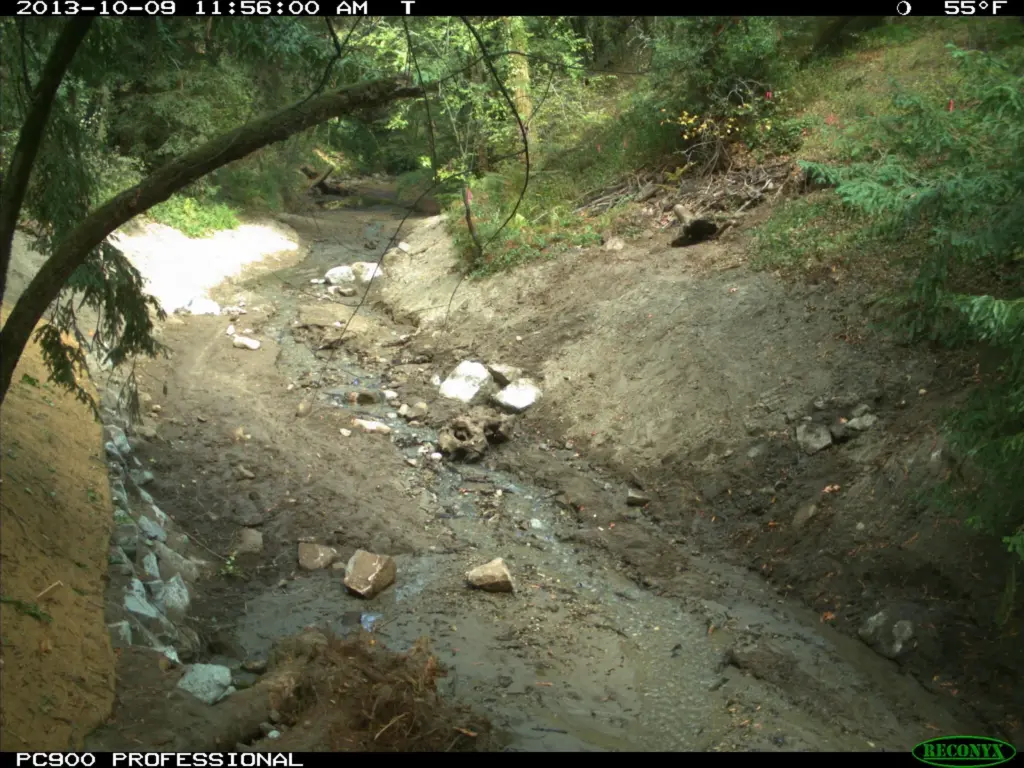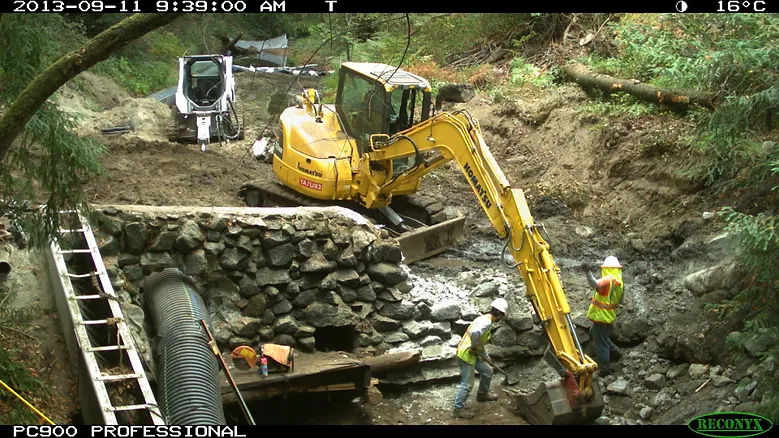
This project removed the 8-foot Cahill Dam, built in 1931, from Branciforte Creek — the last tributary of the San Lorenzo River before it reaches the Pacific Ocean in Santa Cruz County. The dam had blocked migration and buried natural spawning substrate under 250 feet of sediment. Following removal, nearly three miles of upstream spawning and rearing habitat were opened and natural sediment transport restored, benefiting Central California Coast steelhead and providing a high-priority reintroduction corridor for coho salmon.
Location: Branciforte Creek is the last tributary of the San Lorenzo River before it flows to the Pacific Ocean, entering the river about a mile from the coast within the tidally influenced reach of the river in downtown Santa Cruz.
Historical Presence of Anadromous Fish: Central California Coast steelhead juveniles are present throughout Branciforte Creek, but barriers have limited access to the upper reaches. Historically, coho salmon also occurred in the creek, but scientists believe they may have been extirpated during the three-year construction of the flood control channel. The National Marine Fisheries Service 2012 Coho Recovery Plan identified Branciforte Creek as a high priority reintroduction area and one of the highest priority sub-watersheds within the San Lorenzo watershed.
Project Lead Organization: Resource Conservation District of Santa Cruz County (RCDSCC)
Project Partners: NOAA, Regional Water Quality Control Board (RWQCB), State Coastal Conservancy, The Nature Conservancy, U.S. Fish and Wildlife Service, California Department of Fish and Wildlife, and American Rivers. USDA Natural Resources Conservation Service (NRCS) also contributed through the streamlined Santa Cruz Countywide Partners in Restoration Permit Coordination Program.
Project Description: Constructed in 1931, the Branciforte Dam inhibited access to upstream spawning and rearing habitat during low to medium flows and acted as a partial barrier to migration during high flows. Sediment extending 250 feet behind the dam had completely covered the natural substrate mix important for diadromous fish spawning habitat. The 8-foot tall concrete arch dam was no longer used for its original purpose but continued to impede upstream migration of anadromous salmonids and altered sediment transport processes. The project removed the dam, allowed natural sediment transport downstream, stabilized streambanks with rock, and installed a large wood instream structure to provide habitat and grade control during channel readjustment.
Expected Completion: Construction was completed during the 2013 construction season.
Project Effectiveness: Post-project monitoring confirmed that nearly all of the impounded sediment was transported downstream in just two relatively low flow years. The completed project opened nearly three miles of upstream spawning and rearing habitat. The success of this removal also catalyzed further action: the Santa Cruz RCD removed three additional dams in 2021 and plans to remove two more in the coming years.