Indigenous Restoration Groups
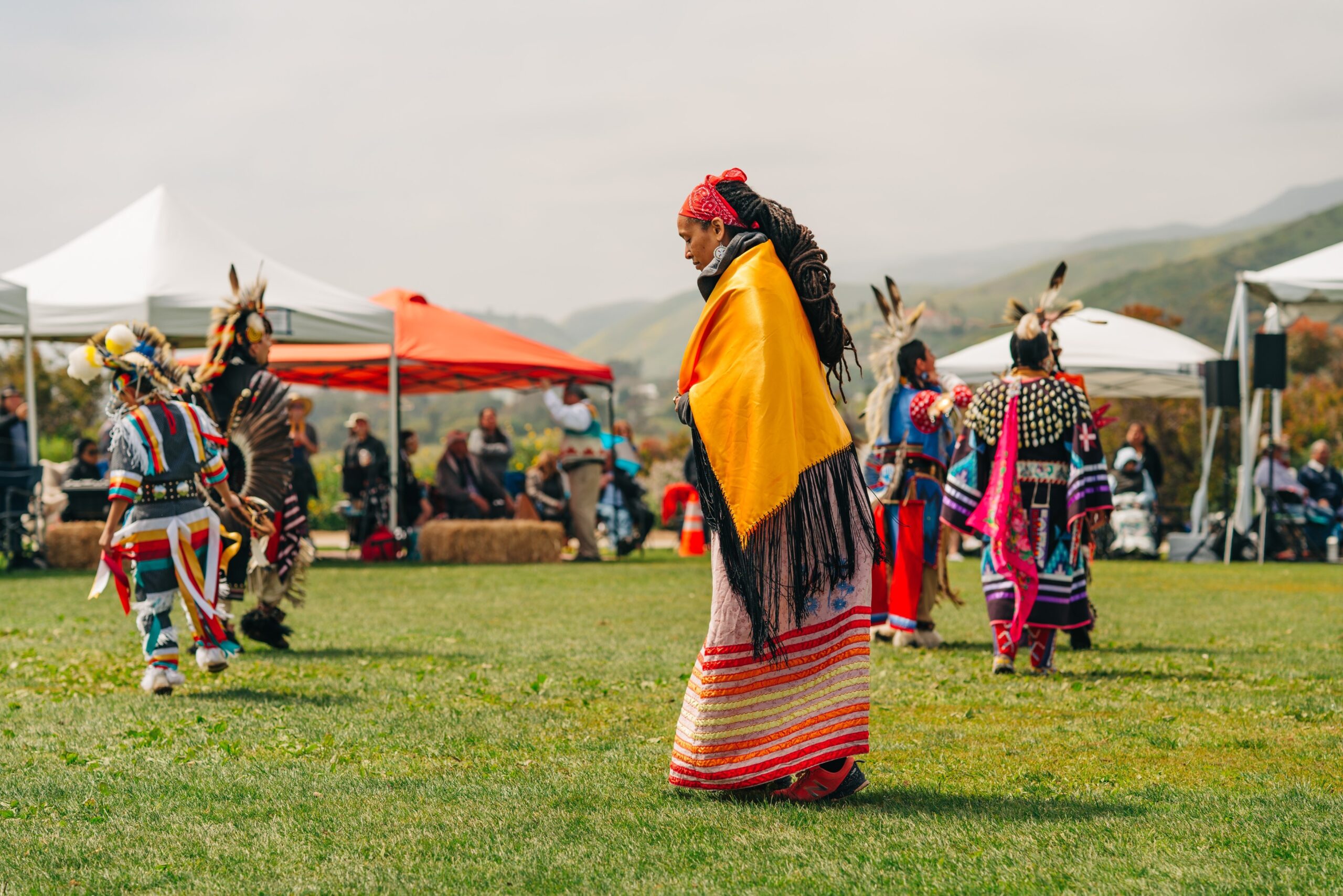
From time immemorial, indigenous peoples tended California’s abundant natural resources using traditional ecological knowledge to support the health of forest, salmon, lamprey, elk, oak, and countless other sources of food, fuel, wood and fiber. Today, tribes are working to recover from the impact of colonization, and the lasting impacts of forced relocation, cultural suppression and criminalization of traditional resource management practices. The Forum commits to learning more about tribal fish passage and river restoration work through consistent engagement with indigenous restoration groups. The list below is a small subset of the many tribal governments, coalitions and nonprofits leading restoration work in California today.
There are no doubt groups which we have missed. To give feedback on this list or request additions, please contact the Forum coordinator.
Tribal Governments
The Yurok Tribal Fisheries Program is dedicated to understanding, managing, conserving, and restoring fish populations of the Klamath Basin for the benefit of present and future generations of Yurok people. The Yurok were also primary leaders in the historic Klamath Dam removal — the largest river restoration project in U.S. history. Read more on the Yurok Tribe Fisheries Program website.
The Karuk Tribe administers salmon fisheries enhancement projects, dam removal and habitat restoration, landscape-scale environmental monitoring and modeling, prescribed and controlled burning, and data sovereignty policy development in their lands in the mid and upper Kalamth Basin. The Karuk tribe was a critial partner in the Klamath River dam removals Read more on the Karuk Tribe website.
After drought and industrial diversions devastated Chinook populations, the tribe developed their own Nur Nature-Based incubator that mimics conditions of the McCloud River to rear salmon that more closely resemble wild fish, and signed a co-management agreement with state and federal partners to return salmon to the McCloud River. The Winnemem Wintu Tribe also operate the Run4Salmon, a relay journey that follows the historic pathway of our salmon to raise awareness about the policies and issues threatening water, fish, and Indigenous life ways. Read more on the Indian Cultural Organization website for the Winnemem Wintu Tribe.
The Hoopa Valley Tribe Fisheries Department is charged with implementation of fish production and anadromous fishery habitat needs in the Trinity River and its tributaries, with significant progress in restoration of juvenile fish habitat with an emphasis on listed Coho salmon. Read more on the Hoopa Valley Tribe website
The Resighini Rancheria, also known as the Pulikla Tribe of Yurok People, leads active fish passage restoration and salmon habitat work at the head of the Klamath River estuary, where their ancestral identity and cultural life remain inseparably tied to the river. The Tribe has been working for over ten years to replace two undersized culverts on Waukell Creek and its tributary Junior Creek — waterways that provide vital freshwater rearing and winter refugia habitats for threatened juvenile Coho salmon, steelhead trout, and coastal cutthroat trout, ultimately securing $2.6 million in federal funding to complete the work. The tribe is also a founding member of the Tribal Marine Stewards Network. Read more on the Resighini Rancheria website.
The Tolowa Dee-ni’ Nation leads fisheries science, habitat restoration, and fish passage work across their ancestral territory, which encompasses seven major rivers along the Northern California coast. The Tribe purchased the Rowdy Creek Fish Hatchery in 2013, establishing it as a Tribal Organization to promote environmental stewardship and support the historical, customary, cultural, and economic practices of the Tribe. Their flagship Rowdy Creek and Dominie Creek Fish Passage Improvement Project restores fish access to more than 13 miles of quality stream habitat in tributaries to the Smith River, reopening critical spawning and rearing habitat for Coho salmon, steelhead, Chinook, and Pacific lamprey that had been blocked since 1972. Read more on the Tolowa Dee-ni’ Nation website.
The Mechoopda Tribe is a key partner in habitat and fish passage restoration across their ancestral territory in Butte and Glenn Counties. In a landmark first for California, the 93-acre Butte Creek Ecological Preserve was transferred to the Mechoopda Indian Tribe, which contains more than a mile of creek frontage and habitat for many species of special status, and is critical salmon habitat and spawning grounds for the largest population of Central Valley Spring Run Chinook. Read more on the Mechoopda Indian Tribe website.
The Pinoleville Pomo Nation is actively working to reconnect Ackerman Creek, a tributary of California’s Russian River to its floodplain, with tribal staff leading the planning effort and collaborative workshops to share cultural and traditional ecological knowledge throughout the process. Read more on the Pinoleville Pomo Nation website.
The Amah Mutsun Land Trust brings Indigenous ecological knowledge back to their lands through partnerships with agencies and research institutions, including seasonal surveys to monitor for salmon following the removal of a 100-year-old defunct dam in the redwood forests of the Santa Cruz mountains, using environmental DNA techniques to look for salmon in the water. Read more on the Amah Mutsun Land Trust website.
The Wishtoyo Chumash Foundation preserves Chumash culture and links traditional ecological knowledge directly to present-day river restoration across Chumash ancestral territory. Wishtoyo and its Ventura Coastkeeper Program conduct ecological assessments at more than 50 locations throughout the Santa Clara River (Utom) watershed. Wishtoyo also integrates Chumash cultural concerns into Clean Water Act and Endangered Species Act litigation against polluters and water diverters, which has been instrumental in achieving settlements to protect the Southern California steelhead in the Santa Clara River watershed. Read more on the Wishtoyo Chumash Foundation website.
The Blue Lake Rancheria serves as a co-manager of the Mad River in Northern California, where the tribe leads fish passage and habitat restoration work on Powers Creek, a key Mad River tributary. In 2016, BLR completed a fish passage restoration project removing an undersized bridge that had blocked salmon passage for decades, and re-graded the creek channel in partnership with NOAA Fisheries. Subsequent restoration phases added in-stream structure and native riparian plantings to improve spawning and rearing habitat for Chinook salmon, coho salmon, and steelhead, with the long-term goal of restoring a harvestable salmon fishery for tribal members. Read more on the Blue Lake Rancheria website.
The Mooretown Rancheria of Maidu Indians, a federally recognized tribe of Concow-Maidu people headquartered in Oroville, California, stewards ancestral lands spanning the foothills and forests of Butte County in the Feather River watershed. The tribe’s Natural Resources Department works to restore resilient watersheds with healthy forests, meadows, and restored hydraulic mine sites, drawing on traditional ecological knowledge and indigenous land management practices. In a landmark agreement, Mooretown Rancheria became the first tribe to sign a formal co-stewardship agreement with BLM California, covering more than 1,300 acres of public lands within their ancestral homeland near Lake Oroville, advancing the tribe’s vision of protecting the watersheds and waterways that have sustained their people since time immemorial. Read more on the Mooretown Rancheria Department of Natural Resources website.
Coalitions and Societies
The Tribal Marine Stewards Network brings together a growing alliance of California Tribal Nations applying Indigenous knowledge and Tribal science to manage fisheries and coastal habitats in the face of climate change, focusing on four themes: environmental stewardship, economic and community prosperity, cultural vitality, and Tribal capacity building, with members leading more than three dozen initiatives. Read more on the Tribal Marine Stewards Network website.
The Native American Fish and Wildlife Society has built a national communications network since 1983 for the exchange of information and management techniques related to self-determined tribal fish and wildlife management, supporting tribes across seven regions including California, and provides guidance on best practices, Tribal data sovereignty, and the integration of TEK into research and resource management. Read more on the NAFWS website
Nonprofits
Ridges to Riffles partners directly with Indigenous governments and communities on legal, science, and policy initiatives to protect and restore natural and cultural resources, including fisheries habitat, forest health, water quality, and water quantity, while engaging in policy reform to support Tribal sovereignty and Indigenous conservation interests. Read more on the Ridges to Riffles website.
Redbud Resource Group strengthens Tribal leadership, relationships, and systems as a Native-led nonprofit working at the intersection of public health, education, and land stewardship. Their Feather River Advocacy Project trains tribal members to protect the watershed using both Indigenous knowledge and Western science. Read more on the Redbud Resource Group website.
Save California Salmon works closely with fishermen and tribes on salmon restoration, with an advisory board made up of salmon-dependent people including leaders from the Tolowa, Hoopa Valley, Winnemem Wintu, Yurok, and Sherwood Valley Tribes. Alongside their advocacy work, SCS has built a substantial education program centered on Indigenous voices and TEK. They offer two curricula aligned with California state education standards: Water Advocacy and Protection in Native California for grades 9–12, and Traditional Ecological Knowledge Science and Management for grades 6–8, with curriculum developers comprising Indigenous peoples, Native American studies professors, Indigenous scientists, and local educators. Read more on the Save California Salmon website.
Lastest News
Get Involved!
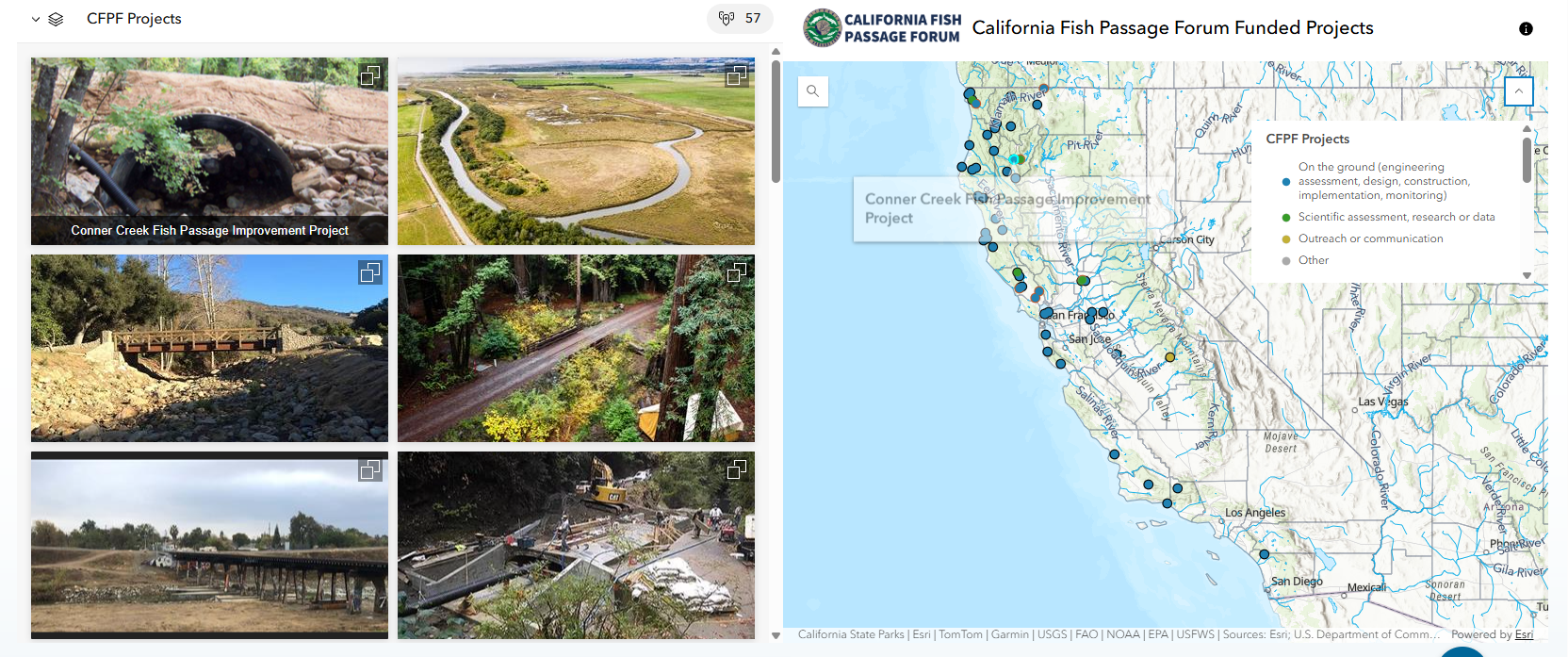
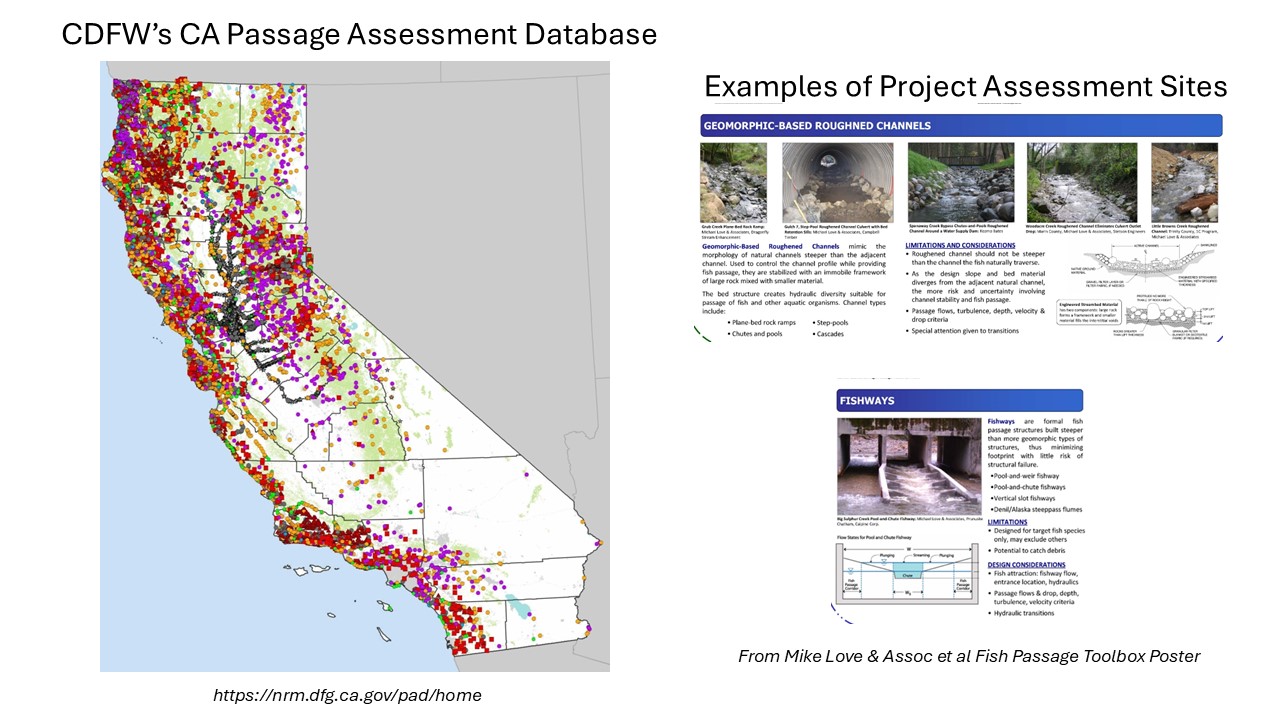
Learn about restoration funding and connect with fish passage experts at a California Fish Passage Forum Committee meeting.