The National Fish Habitat Partnership
What is NFHP?
The California Fish Passage Forum is one of 20 Fish Habitat partnerships recognized under the National Fish Habitat Partnership. The mission of the National Fish Habitat Partnership is to protect, restore, and enhance the nation’s fish and aquatic communities through partnerships that foster fish habitat conservation and improve the quality of life for the American people. NFHP supports the work of the diverse network of fish habitat partnerships, and produces independent data products to assess the state of Americas freshwater and marine fish populations and habitats through the National FIsh Habitat Assessment.
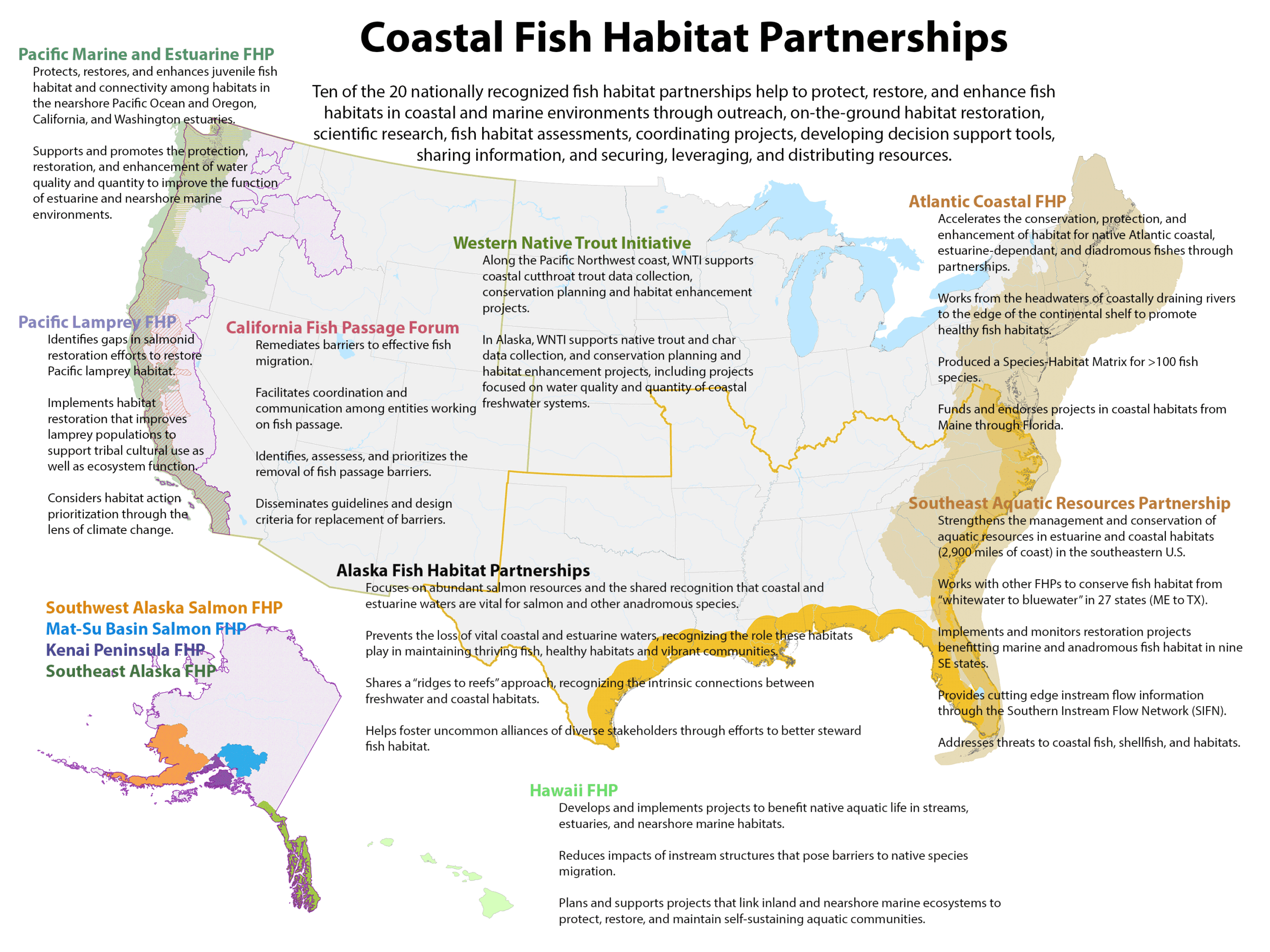
Fish Habitat Partnerships Operating in California
Thats us! Learn more about us by exploring this website, or by contacting the Forum coordinator.
The Pacific Lamprey Conservation Initiative is a collaboration of Native American tribes, federal, state, municipal, and local agencies, and non-governmental organizations working to achieve long-term persistence of Pacific lamprey and their habitats — and to support traditional tribal use of the species — throughout their historical range spanning California, Oregon, Washington, Idaho, and Alaska. PLCI is built on three components — the Pacific Lamprey Assessment, the Pacific Lamprey Conservation Agreement, and Regional Implementation Plans across 18 Regional Management Units — and works with the Bonneville Power Administration and tribal nations to fund lamprey passage and habitat restoration projects across the West. To learn more, visit the Pacific Lamprey Conservation Initiative website.
The Pacific Marine and Estuarine Partnership operates in California, Oregon, and Washington for the benefit of nearshore marine and estuary habitat by providing data tools and training for the assessment of habitat, and engaging restoration practitioners in a community of practice surrounding estuary restoration, where projects often involve restoring freshwater and tidal connections, created off-channel rearing habitat for juvenile salmon, and recovered historic tidal swamp habitats. To learn more, visit the Pacific Marine and Estuarine Partnership website.
The Desert Fish Habitat Partnership addresses fish and habitat conservation across the Great Basin, Mojave, Sonoran, and Chihuahuan deserts within the United States, where native desert fishes have declined sharply due to habitat loss, alteration, and the widespread introduction of nonnative species. By partnering across geopolitical boundaries, the Partnership identifies priority species and habitats and integrates the best available science to direct conservation actions and funding toward those locations most likely to arrest the decline of imperiled desert fishes. To learn more, visit the Desert Fish Habitat Partnership website.
The Western Native Trout Initiative focuses on the conservation of native trout and char, habitat connectivity, and water quality and quantity across Alaska and 11 other Western states, targeting imperiled species including cutthroat trout, bull trout, Apache trout, and other native western char. The Partnership funds habitat connectivity projects such as fish passage barrier removal, stream temperature improvement, and riparian restoration, and also supports efforts to remove nonnative trout that have displaced native populations throughout much of their historic range. To learn more, visit the Western Native Trout Initiative website.
All Partnerships
The Atlantic Coastal Fish Habitat Partnership operates across 476,357 square miles from Maine to the Florida Keys, spanning all or part of 16 states from the headwaters of coastally draining rivers to the continental shelf edge, with a primary focus on estuarine habitats used by coastal, estuarine-dependent, and diadromous fish species. ACFHP pursues its mission through a three-pronged approach: conducting regional habitat assessments and developing science and data tools to identify high-priority areas, delivering expertise and resources to on-the-ground restoration projects, and communicating successes while raising awareness of the threats facing Atlantic coastal fish habitats. To learn more, visit the Atlantic Coastal Fish Habitat Partnership website.
The Driftless Area Restoration Effort operates within a 24,000-square-mile region of southeast Minnesota, northeast Iowa, southwest Wisconsin, and northwest Illinois — an area bypassed by the last continental glacier — renowned for its high concentration of spring-fed coldwater streams and remarkable diversity of aquatic life. The partnership was formed to address habitat degradation, loss, and alteration as the primary drivers of fish population decline in this unique region, implementing streamside vegetation restoration, sediment reduction, and stream channel improvement projects to benefit cold-water fish communities. To learn more, visit the Driftless Area Restoration Effort website.
The Eastern Brook Trout Joint Venture coordinates locally driven efforts across 16 state management agencies from Georgia to Maine, along with four federal agencies and several NGOs, to improve fish habitat and restore fishable populations of brook trout throughout their historic eastern range — a range the species now occupies at less than 30% of its historic extent. EBTJV provides annual funding for on-the-ground habitat management projects and maintains the most comprehensive distribution map of brook, brown, and rainbow trout occupancy across their entire eastern range. To learn more, visit the Eastern Brook Trout Joint Venture website.
The Fishers and Farmers Partnership engages rural landowners across the Upper Mississippi River Basin to voluntarily develop and implement science-based solutions to local fish habitat and water quality issues, working to add value to farms while restoring aquatic habitat both on-site and downstream on the Mississippi River. Approved projects are farmer-led and often include stabilization of eroding stream banks, reconnection to floodplain, and construction of in-stream habitat, all supported with flexible cost-share funding and technical assistance from conservation partners. To learn more, visit the Fishers and Farmers Partnership website.
The Great Lakes Basin Fish Habitat Partnership covers all of Michigan and portions of New York, Pennsylvania, Ohio, Indiana, Illinois, Wisconsin, and Minnesota in the U.S., along with Ontario and Quebec in Canada — 295,710 square miles encompassing the largest surface freshwater system in the world, with sport and commercial fisheries valued at over $7 billion annually and over 11,000 miles of coastline. The Partnership provides the leadership and coordination necessary for a comprehensive, strategic approach to fish habitat conservation across the entire binational basin, addressing invasive species, biodiversity loss, water quality, contaminants, and degradation of coastal wetlands. To learn more, visit the Great Lakes Basin Fish Habitat Partnership website.
The Great Plains Fish Habitat Partnership spans approximately 626,524 square miles across all of North Dakota, South Dakota, Nebraska, and Kansas, and portions of Minnesota, Iowa, Missouri, Montana, Wyoming, and Colorado, focusing on the Missouri River watershed, the Arkansas River watershed in Kansas, and the Souris and Red River watersheds in North Dakota and western Minnesota. The Partnership works to conserve native aquatic species of commercial and recreational importance — including sauger, sunfishes, catfishes, buffaloes, and paddlefish — addressing the slow but steady decline in aquatic abundance and diversity across the region. To learn more, visit the Great Plains Fish Habitat Partnership website.
The Hawaiʻi Fish Habitat Partnership operates statewide across the five main Hawaiian Islands with a focus on restoring streams, estuaries, and coastal marine habitats for native diadromous fish and invertebrates, all of which require unrestricted movement between upper watersheds and the sea to complete their life cycles. The Partnership’s key actions include removal of fish passage barriers, control of invasive riparian vegetation, water quality improvement in coastal areas, and educational support for native Hawaiian student interns, engaging local watershed coalitions, private landowners, and Native Hawaiian groups in stewardship. To learn more, visit the Hawaiʻi Fish Habitat Partnership website.
The Kenai Peninsula Fish Habitat Partnership covers approximately 25,000 square miles with over 20,000 miles of in-stream habitat in southcentral Alaska, sustaining populations of coho, sockeye, chinook, pink, and chum salmon as well as rainbow and steelhead trout that make the peninsula a premier angling destination. The Partnership fosters responsible stewardship by addressing threats from increasing development, a warming climate, and invasive species, while raising awareness for species of deep cultural, ecological, and economic significance to communities that have depended on salmon for longer than recorded history. To learn more, visit the Kenai Peninsula Fish Habitat Partnership website.
The Matanuska-Susitna Basin Salmon Habitat Partnership operates within a 24,500-square-mile region of southcentral Alaska that supports thriving populations of all five Pacific salmon species as well as world-class rainbow trout, char, and grayling, making it one of the country’s premier sportfishing and wildlife destinations. The Partnership brings together local communities, tribes, agencies, and conservation organizations to pursue voluntary, science-based habitat conservation in this rapidly developing basin, implementing projects such as invasive aquatic plant eradication, streambank restoration, and riparian revegetation. To learn more, visit the Matanuska-Susitna Basin Salmon Habitat Partnership website.
The Midwest Glacial Lakes Partnership coordinates conservation of fish habitat in the over 40,000 glacial lakes across Illinois, Indiana, Iowa, Michigan, Minnesota, North Dakota, South Dakota, and Wisconsin, working to protect, rehabilitate, and enhance sustainable fish habitats for the use and enjoyment of current and future generations. The Partnership addresses threats from shoreline development, agricultural runoff, invasive species, and a changing climate through research, education and outreach, and on-the-ground conservation projects, engaging state natural resource agencies, tribal organizations, universities, and stakeholder groups. To learn more, visit the Midwest Glacial Lakes Partnership website.
The Ohio River Basin Fish Habitat Partnership covers the 143,550-square-mile watershed of the Ohio River — the second largest U.S. river by annual discharge — from the southwestern corner of Maryland and western New York to the confluence with the Mississippi, excluding the Tennessee-Cumberland sub-basin to avoid overlap with the Southeast Aquatic Resources Partnership. The basin contains at least 350 fish species ranging from endemic headwater darters and dace to paddlefish, lake sturgeon, and shovelnose sturgeon, plus more than 120 mussel species including many that are federally listed — approaching half of all U.S. freshwater fish and over a third of all mussel species — which the Partnership works to protect through headwater restoration, off-channel habitat improvement, and fish passage projects. To learn more, visit the Ohio River Basin Fish Habitat Partnership website.
Unlike the other geographically defined Fish Habitat Partnerships, the Reservoir Fisheries Habitat Partnership is a system-based partnership operating on a national scale, promoting the protection, restoration, and enhancement of habitat for fish and other aquatic species in reservoir systems by integrating watershed conservation, in-reservoir management, and downstream flow management to address aquatic habitat impairments holistically. The Partnership assesses and prioritizes reservoirs of greatest conservation need and develops the science, technology, tools, best management practices, and monitoring protocols needed for effective fisheries management across the nation’s reservoir systems. To learn more, visit the Reservoir Fisheries Habitat Partnership website.
The Southeast Alaska Fish Habitat Partnership fosters cooperative fish habitat conservation in freshwater, estuarine, and marine ecosystems across the southern panhandle of Alaska and the Alexander Archipelago, a region encompassing nearly 17 million acres of the Tongass National Forest — the largest national forest in the United States and a major producer of salmon. The Partnership supports conservation, restoration, and management across this landscape with consideration of the economic, social, and cultural interests of local communities, targeting coho and chinook salmon, steelhead trout, and other species dependent on the region’s freshwater and coastal habitats. To learn more, visit the Southeast Alaska Fish Habitat Partnership website.
The Southeast Aquatic Resources Partnership is a collaboration of federal and state agencies, conservation organizations, and private interests across 14 southern states and Puerto Rico, covering roughly 26,000 miles of aquatic shoreline and over 70 major river basins in a region that contains 34% of all North American fish species and 90% of the native mussel species designated as endangered, threatened, or of special concern. SARP’s notable coastal work — conducted in partnership with NOAA — has inspired communities across the Southeast to restore oyster reef, salt marsh, mangrove, and seagrass habitats, while broader inland efforts address riparian zones, water quality, watershed connectivity, and hydrologic conditions. To learn more, visit the Southeast Aquatic Resources Partnership website.
The Southwest Alaska Salmon Habitat Partnership brings together local communities, Native organizations, subsistence users, commercial fishing interests, and state and federal agencies to protect, conserve, and restore watersheds sustaining wild salmon and the fisheries of Southwest Alaska through voluntary conservation measures. This roughly 40-million-acre region — the heart of Bristol Bay, which produces over half of the world’s supply of sockeye salmon — also supports rainbow trout, Dolly Varden, Arctic char, grayling, and lake trout, and the Partnership safeguards it through landscape-scale land protection, conservation easements with Native corporations, and collaborative habitat stewardship. To learn more, visit the Southwest Alaska Salmon Habitat Partnership website.
Lastest News
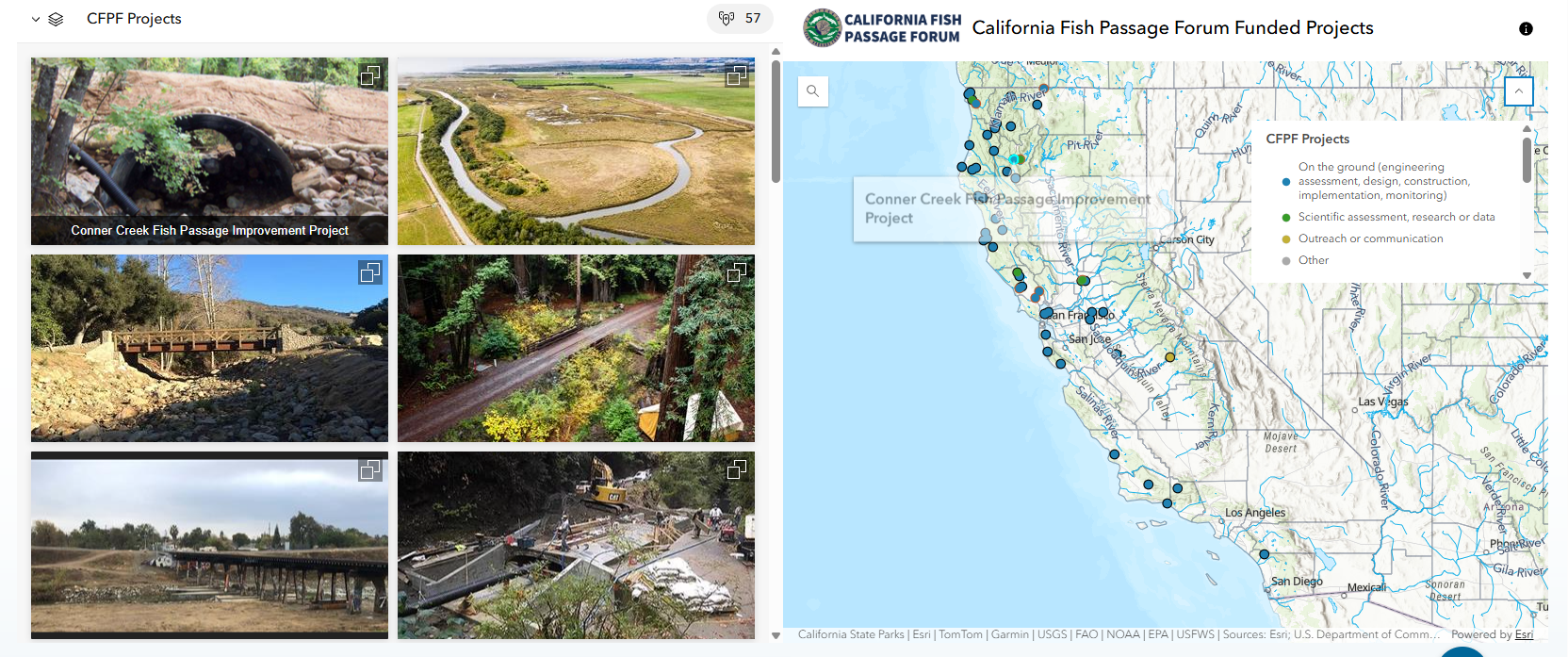
Get Involved!
Learn about restoration funding and connect with fish passage experts at a California Fish Passage Forum Committee meeting.