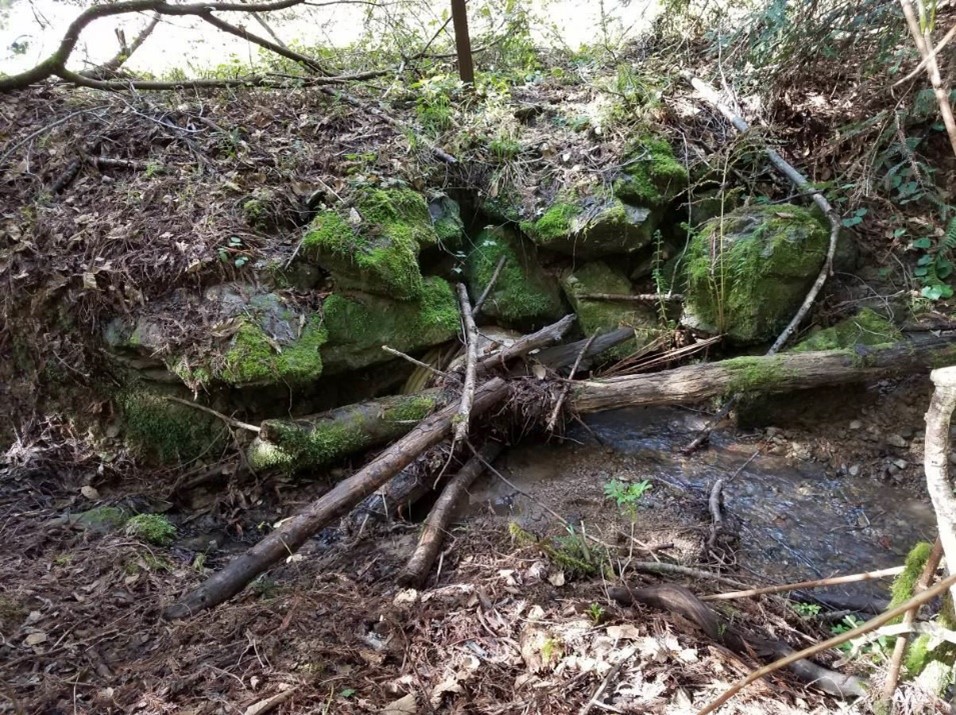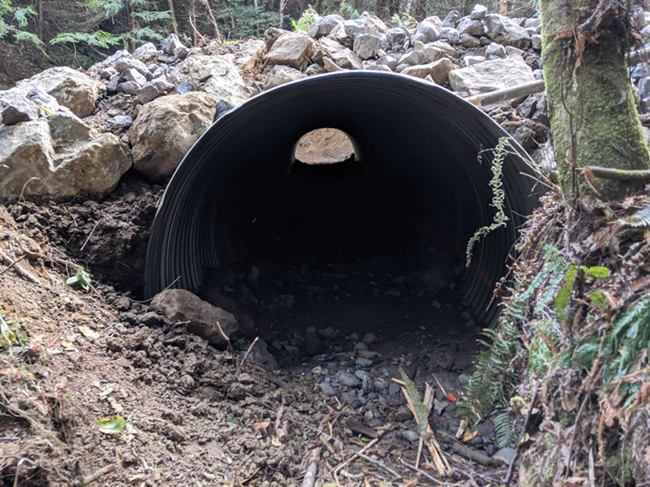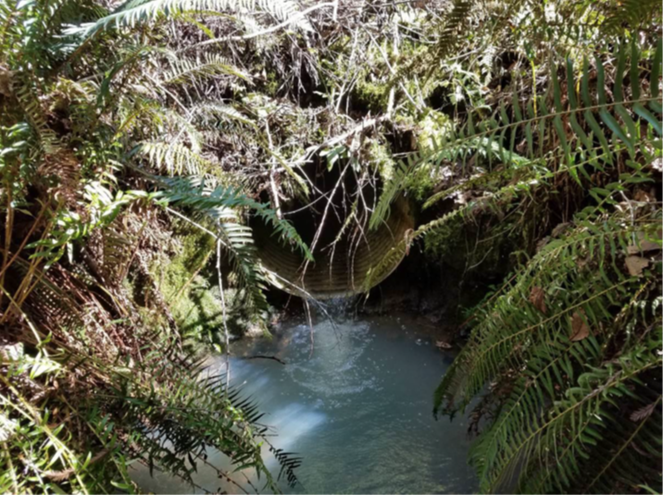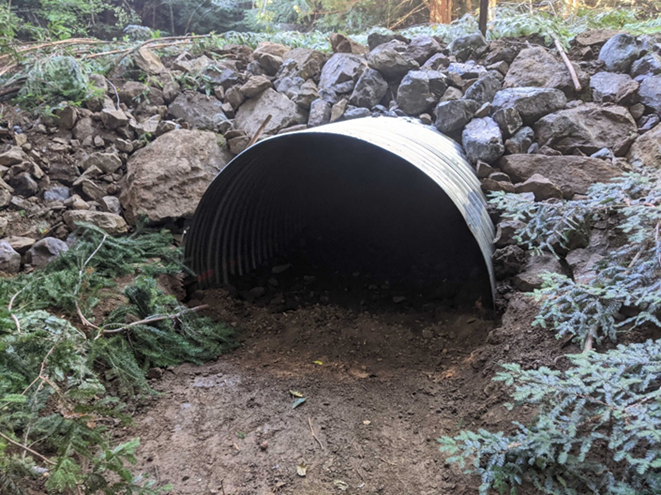
This project replaced an undersized, deteriorating corrugated metal culvert on the M-1 Road with a full-sized 96-inch diameter culvert to restore fish passage on No-Name Gulch, a tributary to Big River in Mendocino County, California. The old culvert was a partial barrier to migrating salmonids on a stream identified by NOAA as historically productive habitat. The replacement opens 0.21 miles of spawning and rearing habitat in a high-priority recovery watershed for Central California Coast Coho salmon, North Coast steelhead, and Chinook salmon.
Project Name: M1-Road Fish Passage Improvement Project
Location: No-Name Gulch (also known as Chapman Gulch), a small tributary to Big River, located approximately 5.1 miles upstream of Big River Beach along the M-1 Road (Big River Haul Road) in Mendocino County, California. Big River flows into the Pacific Ocean near Fort Bragg. The project site lies within the lower Big River basin, a NOAA Core Recovery area for Central California Coast (CCC) Coho salmon.
Historical Fish Presence: No-Name Gulch is identified by NOAA as a stream that historically provided good salmonid habitat. The broader Big River watershed supports CCC Coho salmon (federally threatened), North Coast steelhead trout, and Chinook salmon. The gulch also contains an approximately 0.8-acre freshwater marsh near the Big River confluence that likely provides juvenile salmonid rearing habitat.
Project Lead: Trout Unlimited – North Coast Coho Project
Project Partners: Sonoma-Mendocino Coast District, California State Parks (landowner); Pacific Watershed Associates (construction oversight); Glissman Excavation (construction); William Rich and Associates (cultural resources); North Coast Resource Management (botanical survey); NOAA Community-Based Restoration Center (co-funder
CFPF Funding: $81,857
Project Description: An undersized, deteriorating corrugated metal culvert (3.0′ diameter, 40-foot length, 3.65% slope) on the M-1 Road crossing of No-Name Gulch was classified as a partial barrier (GRAY) to migrating salmonids. The culvert was far too narrow relative to the active channel width of 6.6 feet, and inadequate for storm flows. The project replaced it with a properly sized 96-inch diameter, 60-foot-long SSP culvert. Construction treated 105 linear feet of stream channel, involving excavation of approximately 300 yd³ of sediment, placement of riprap and imported streambed materials, and installation of road base. Permits secured included Nationwide Permit 27, 401 coverage, and a CEQA categorical exemption.
Expected Completion: Fall/Winter 2020
Project Effectiveness: The new culvert opened 0.21 miles of salmonid spawning and rearing habitat in the lower Big River basin. Post-construction photographic monitoring and stream crossing surveys were completed by California State Parks and Pacific Watershed Associates, with a final monitoring report in draft at the time of submission. California State Parks staff committed to ongoing periodic monitoring of the site for fish presence. No fish relocation was required during construction as the channel was dry.