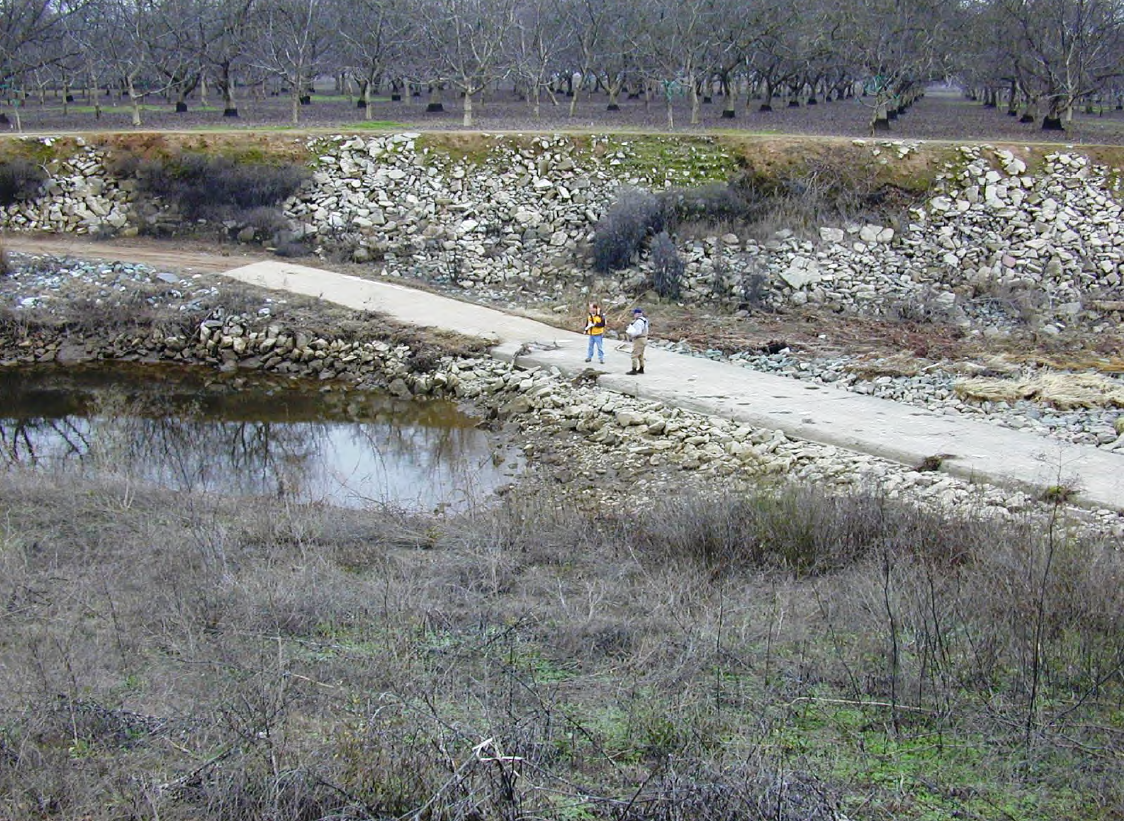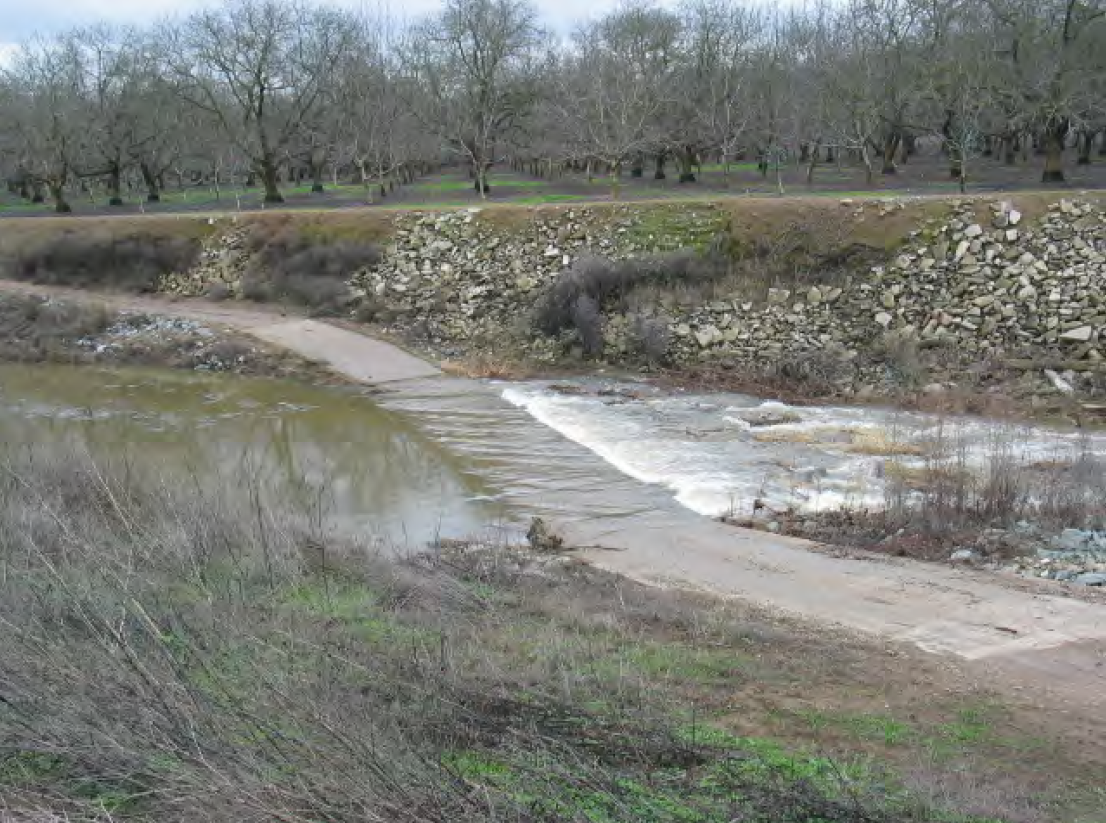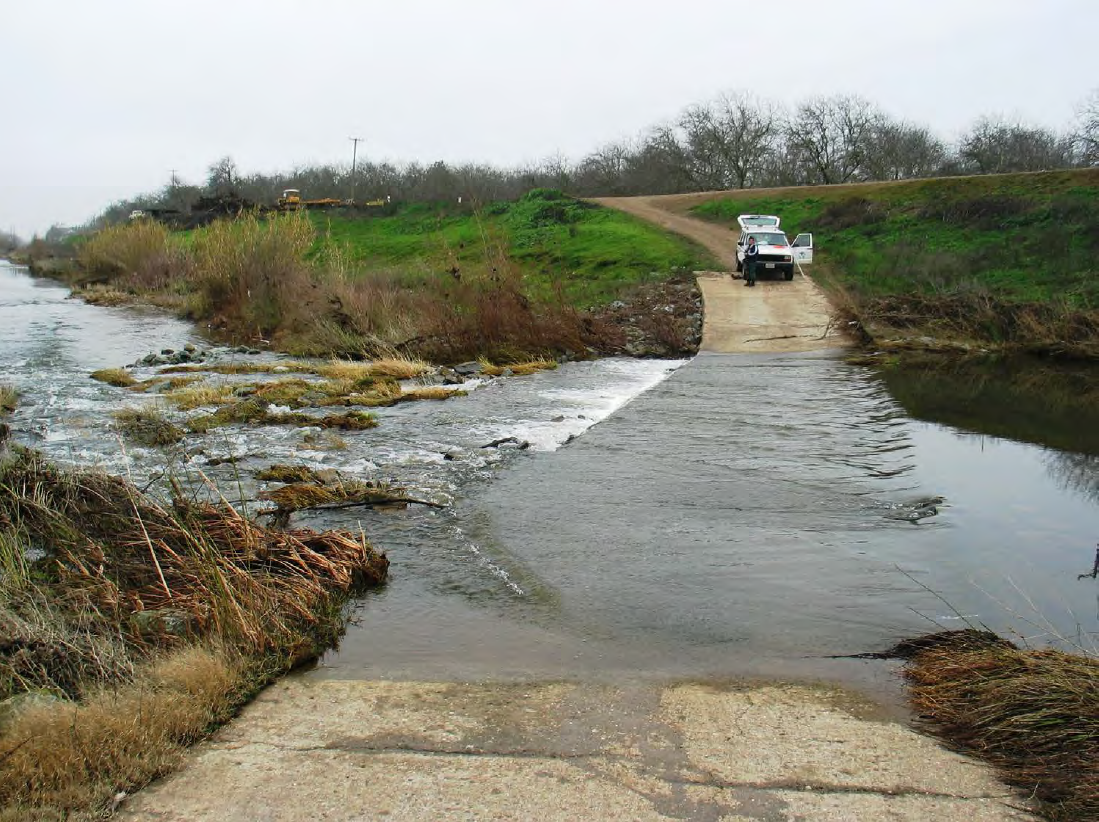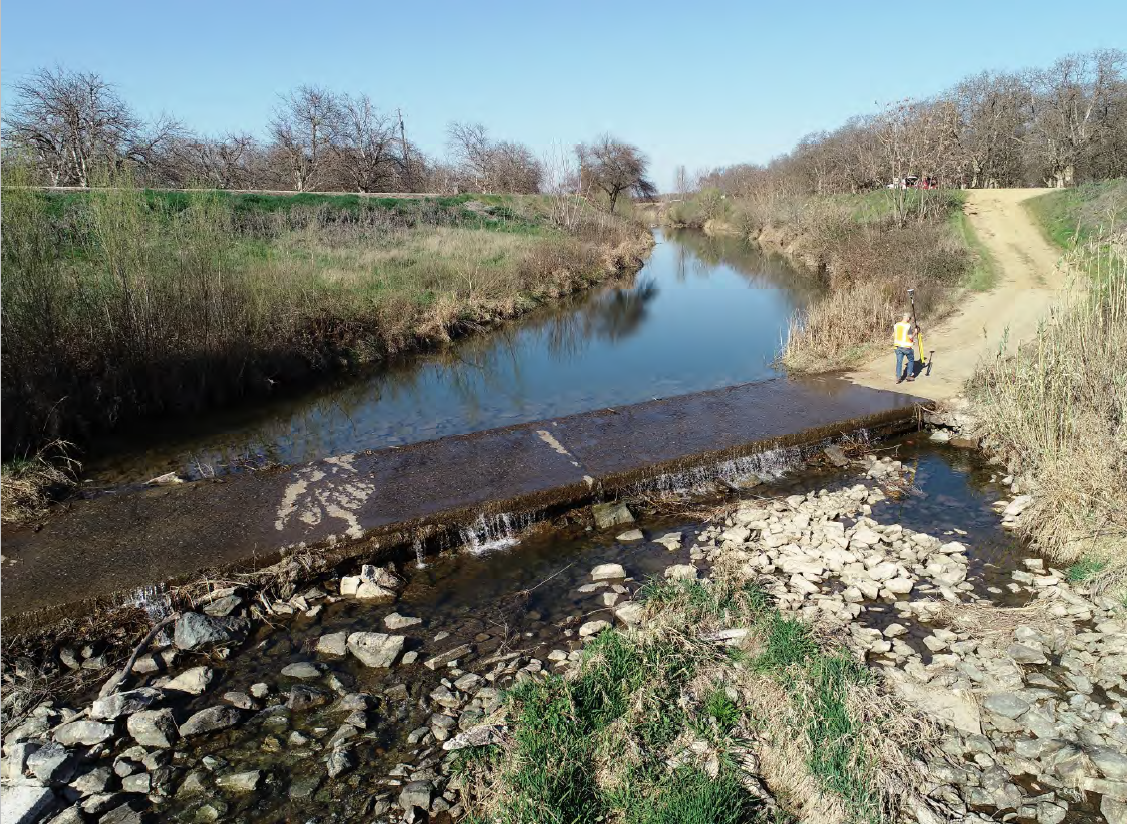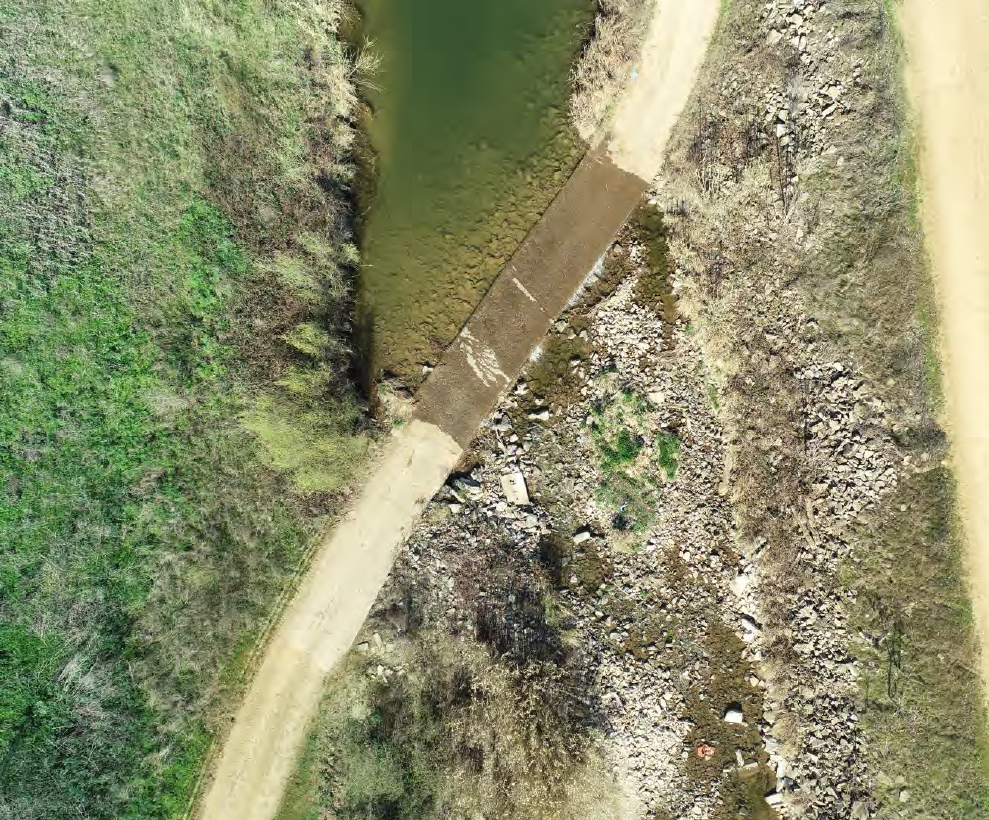
This project replaced a low-water road crossing on Mormon Slough with fish-passable box culverts to improve migration conditions for federally threatened California Central Valley steelhead and fall-run Chinook salmon. Located approximately 13 miles upstream of the Calaveras River’s confluence with the San Joaquin River in San Joaquin County, the project removed one of the worst-ranked passage barriers in the lower Calaveras watershed, reducing flow velocities at the crossing and significantly expanding the window of passable conditions for both adult and juvenile salmonids.
Project Name: Hosie Low Water Road Crossing Fish Passage Project
Location: Mormon Slough, approximately 13 miles upstream of the confluence of the Calaveras River with the San Joaquin River, near Linden in San Joaquin County. The Calaveras River is a tributary to the lower San Joaquin River, draining a watershed of approximately 1,040 square miles. Mormon Slough serves as one of the primary anadromous fish migration corridors in the system.
Historical Fish Presence: The Calaveras River and Mormon Slough historically supported fall-run, late-fall-run, and spring-run Chinook salmon (O. tshawytscha), as well as Central Valley steelhead (O. mykiss), prior to construction of New Hogan Dam in 1964, which blocked access to upper watershed spawning habitat. The lower Calaveras and Mormon Slough continue to support opportunistic use by fall-run Chinook salmon and California Central Valley steelhead, the latter listed as threatened under the ESA. Adult Chinook salmon have been observed in the Mormon Slough in notable numbers since at least 2001, and juvenile salmonid trapping has documented thousands of outmigrating O. mykiss annually.
Project Lead: Stockton East Water District (SEWD)
Project Partners: NOAA National Marine Fisheries Service (NMFS), California Department of Fish and Wildlife (CDFW), U.S. Fish & Wildlife Service (USFWS), U.S. Army Corps of Engineers (USACE), California Department of Water Resources (DWR), FISHBIO
CFPF Funding: $50,000
Project Description: The existing Hosie Low Water Crossing was a concrete low-flow road crossing that functioned as a partial barrier to anadromous fish migration on Mormon Slough. Under average conditions, adult steelhead had unimpaired passage only approximately 16% of the time during their migration period, and adult Chinook salmon only approximately 5% of the time (passage threshold of 460 cfs). Juvenile passage was unimpaired only about 30% of the migration period. The crossing was identified as one of the worst-ranked fish passage barriers in the lower Calaveras watershed in the 2007 Calaveras River Fish Migration Barriers Assessment Report. The project replaced the crossing with a series of precast concrete box culverts (20 units, 4′ long, 12′ span, 9′ height) set at a 0.5% slope, designed to allow water to pass at lower velocities and substantially increase the frequency and duration of passable conditions for both adult and juvenile salmonids. Forum funding supported the construction phase. Deliverables included geotechnical reports, final design drawings, CEQA/environmental documentation, construction management, and as-built plans. As of the August 2023 progress report, design was complete, all permits including the Section 408 Central Valley Flood Protection Board Encroachment Permit had been approved, and construction was set to mobilize August 1, 2023, with the old crossing to be removed and replaced.
Expected Completion: Fall 2023
Project Effectiveness: No post-construction monitoring results were available within the provided documents, which cover through July 31, 2023. Monitoring responsibilities are detailed in the Final Environmental Assessment/Initial Study for the Calaveras River Habitat Conservation Plan. The District committed to pre- and post-project monitoring consistent with CFPF performance measures. A similar upstream project on Mormon Slough — the Caprini Low Water Crossing replacement — provided a useful precedent, demonstrating that replacement of a perched crossing with a properly sized structure substantially improved passage conditions.