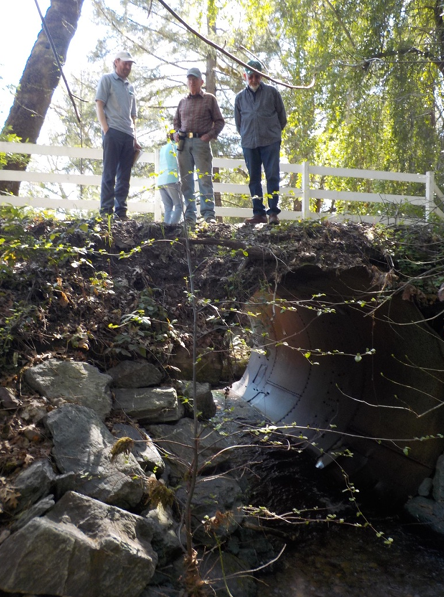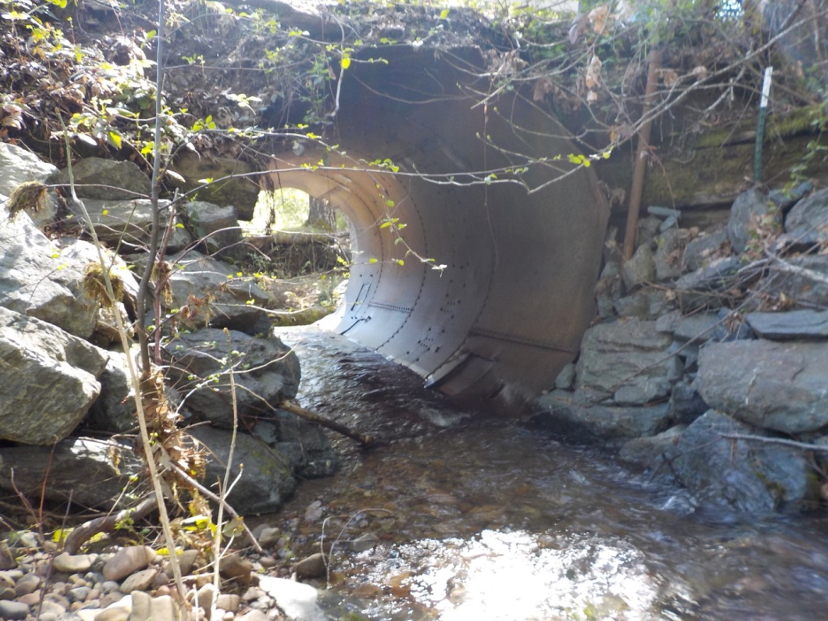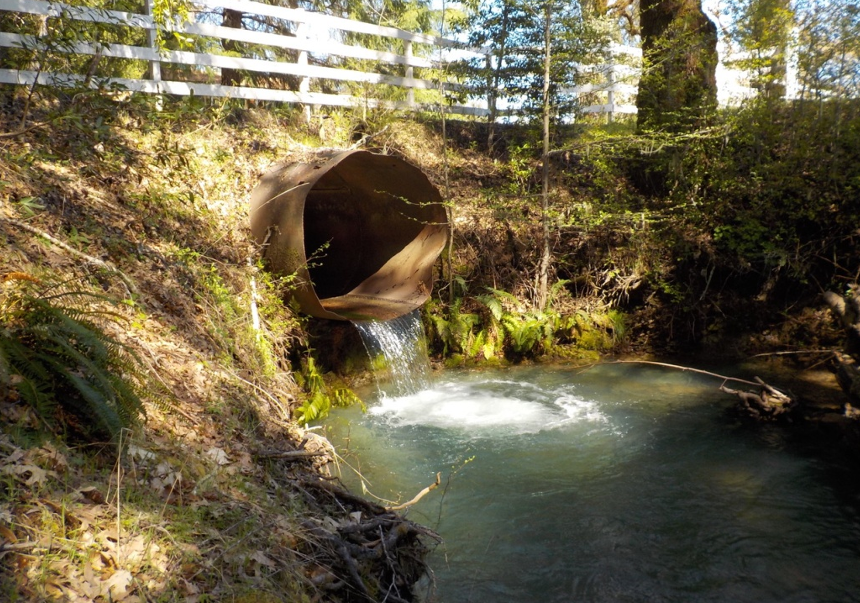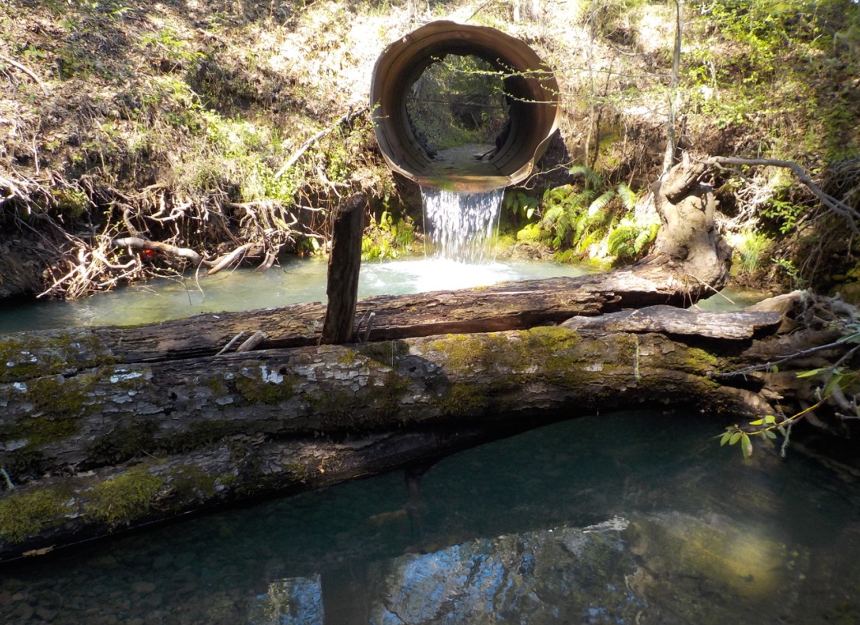
This project replaced two culverted road crossings on Little Case Creek — a tributary of Tenmile Creek in Laytonville, Mendocino County — with bridges to open up to one mile of upstream spawning and rearing habitat for endangered Central California Coast coho salmon and steelhead. Forum funding covered the permitting, cultural and biological surveys, and project oversight needed to advance the project to construction, which was funded separately through the CDFW Fisheries Restoration Grant Program.
Location: Little Case Creek, a tributary to Tenmile Creek, in Laytonville, Mendocino County. Culvert 1 is located under a private road approximately 4,100 feet upstream from the Tenmile Creek confluence, Culvert 2 is located under Fitch Road approximately 4,980 feet upstream from the confluence. Tenmile Creek is a 65-square-mile watershed draining roughly half of the upper South Fork Eel River watershed and is located within the Cahto Peak 7.5 Minute USGS Quadrangle.
Historical Fish Presence: Tenmile Creek and its tributaries historically supported coho salmon (O. kisutch), Chinook salmon (O. tshawytscha), and steelhead (O. mykiss). The low gradient of the Tenmile Creek system would have made it historically productive coho habitat, though coho are now present at very low levels. Juvenile coho salmon were observed in lower Little Case Creek in September 2022 by the Eel River Recovery Project — a notable discovery given that coho had been documented in the Tenmile Creek watershed only once previously since monitoring began in 2018. Tenmile Creek’s western tributaries, including Little Case Creek, have been identified as high-priority habitat for coho conservation due to their cold water and baseflow characteristics. CCC coho salmon are listed as endangered under the federal Endangered Species Act.
Project Lead: Eel River Watershed Improvement Group (ERWIG)
Project Partners: California Department of Fish and Wildlife (CDFW, provided a biologist for fish relocation and co-funded LSAA permitting costs of $309.55); CDFW Fisheries Restoration Grant Program (FRGP, funded culvert replacement construction up to $595,313); William Rich and Associates (archaeological and botanical surveys); Pacific Watershed Associates (paleontological surveys)
CFPF Funding: $20,924.00
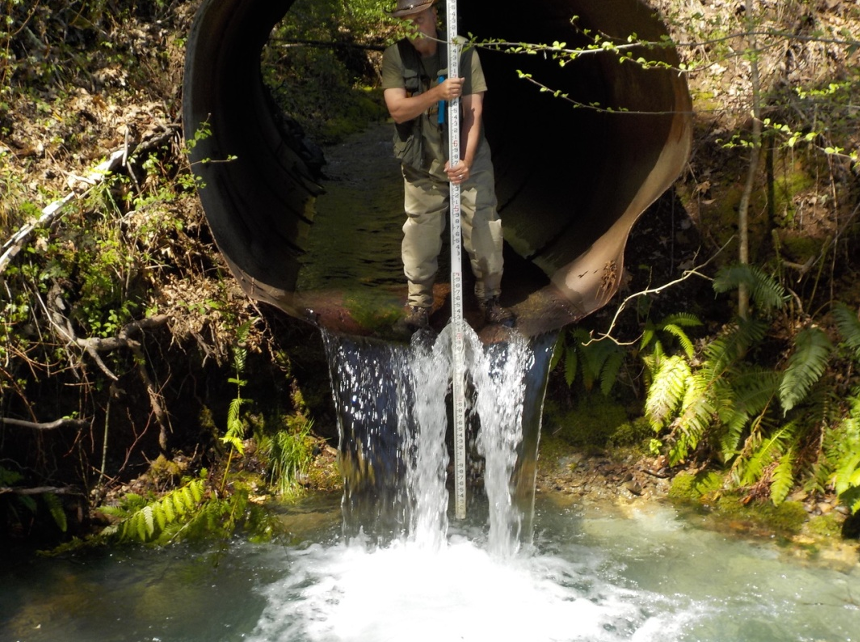
Project Description: Two culverted road crossings on Little Case Creek constituted a significant barrier to salmonid access on this coho-bearing tributary. Culvert 1 had an 18% slope and was hydraulically undersized, creating a partial barrier to adult salmonids and a complete barrier to juveniles. Culvert 2 had a three-foot plunge at its outlet, again blocking juvenile passage entirely. Together, these barriers prevented coho salmon and steelhead from accessing up to one mile of upstream spawning and rearing habitat. The two culverts were identified as high priority for removal by CDFW and recommended for replacement in the 2018 CDFW Stream Inventory Report, which also funded the design phase. Forum funding supported the permitting phase of the project, including completion of the LSAA, required cultural resource surveys (archaeological and botanical), paleontological investigations, and the ERWIG staff time needed to coordinate subcontractors, negotiate with agencies, and manage the grant. CDFW provided a project biologist for fish relocation at no cost to the project, freeing up budgeted Forum funds. The culvert replacements themselves — installation of bridges at both crossings — were funded through the CDFW FRGP.
Expected Completion: Fall 2024
Project Effectiveness: Post-restoration, both crossings will provide unimpeded access to up to one mile of upstream habitat for adult and juvenile coho salmon and steelhead.