This project is retrofitting a chronically clogged fish ladder and sediment basin on lower Wildcat Creek in unincorporated North Richmond and the cities of Richmond and San Pablo, Contra Costa County, to restore passage for threatened Central California Coast steelhead. The broader effort also adds mini-parks, a community trail, K-12 education, citizen-science water quality monitoring, green-jobs workforce training, and creek cleanups benefiting this disadvantaged urban watershed.
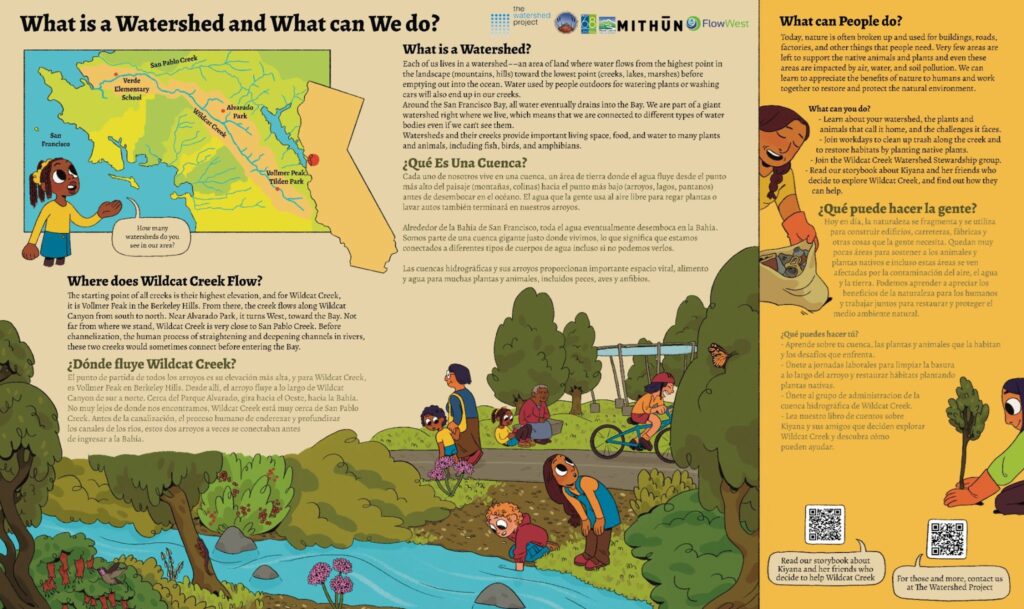
Location: Lower Wildcat Creek in unincorporated North Richmond and the Cities of Richmond and San Pablo, Contra Costa County. The creek continues roughly two miles west to San Pablo Bay; its headwaters rise in Wildcat Canyon in the Berkeley hills, largely within East Bay Regional Park District’s Tilden and Wildcat Canyon parks.
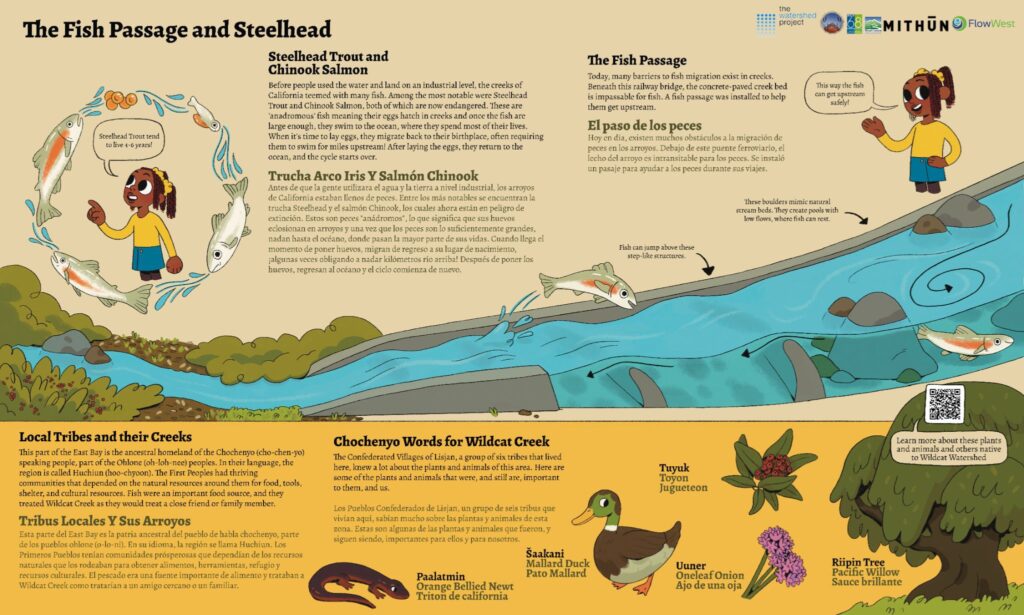
Historical Fish Presence: Central California Coast steelhead trout (Oncorhynchus mykiss) and threespine stickleback. Steelhead once spawned and reared throughout the watershed, but current populations are estimated at less than 10% of historical levels, and CDFW has not documented steelhead spawning in this part of the Bay watershed since the 2012 drought began. A resident trout population persists in the upper watershed on EBRPD land.
Project Lead: The Watershed Project (TWP)
Project Partners: FlowWest Consultants (engineering/implementation), Contra Costa County Flood Control and Water Conservation District (facility owner and construction manager), California Department of Water Resources (Urban Stream Restoration Program), Trout Unlimited (John Muir Chapter), California Fish Passage Forum, East Bay Regional Park District, Wildcat-San Pablo Creeks Watershed Council, Mithun (design), Verde Elementary School, S.O.S. Richmond, and the Wildcat Creek Watershed Initiative for Learning and Development (WWILD).
CFPF Funding: $67,610 provided for FY2024–2026 community engagement, monitoring, and education work.
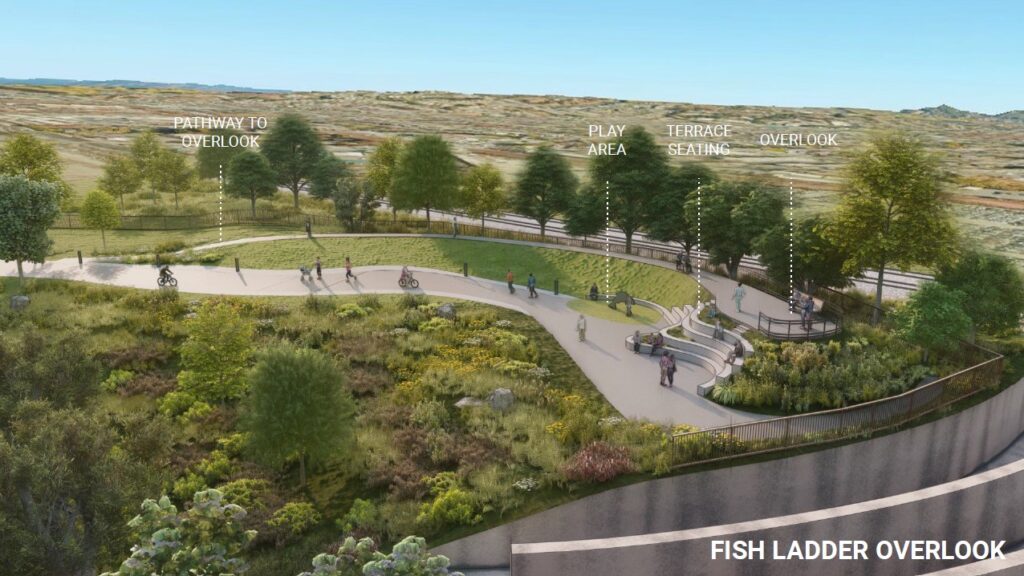
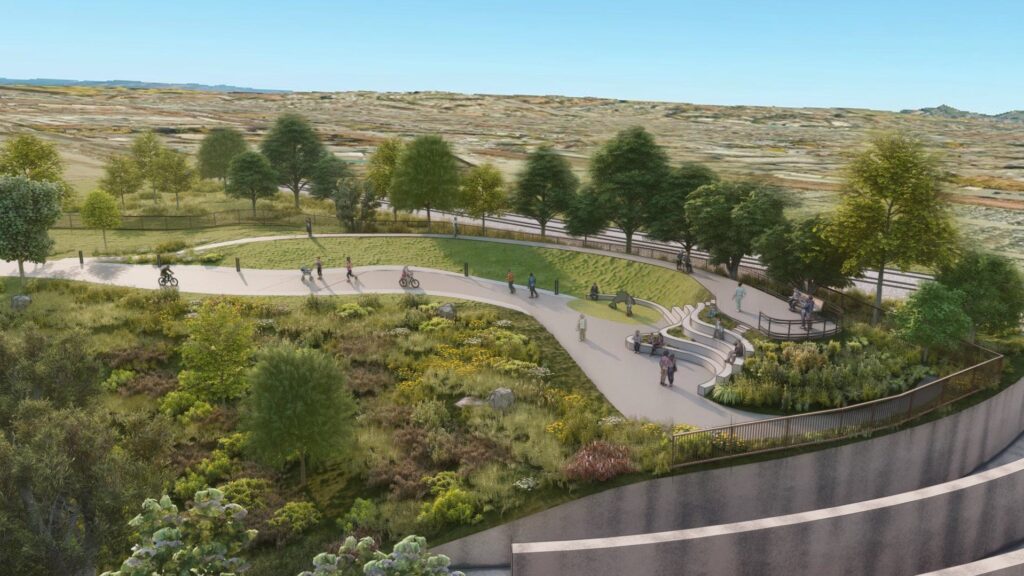
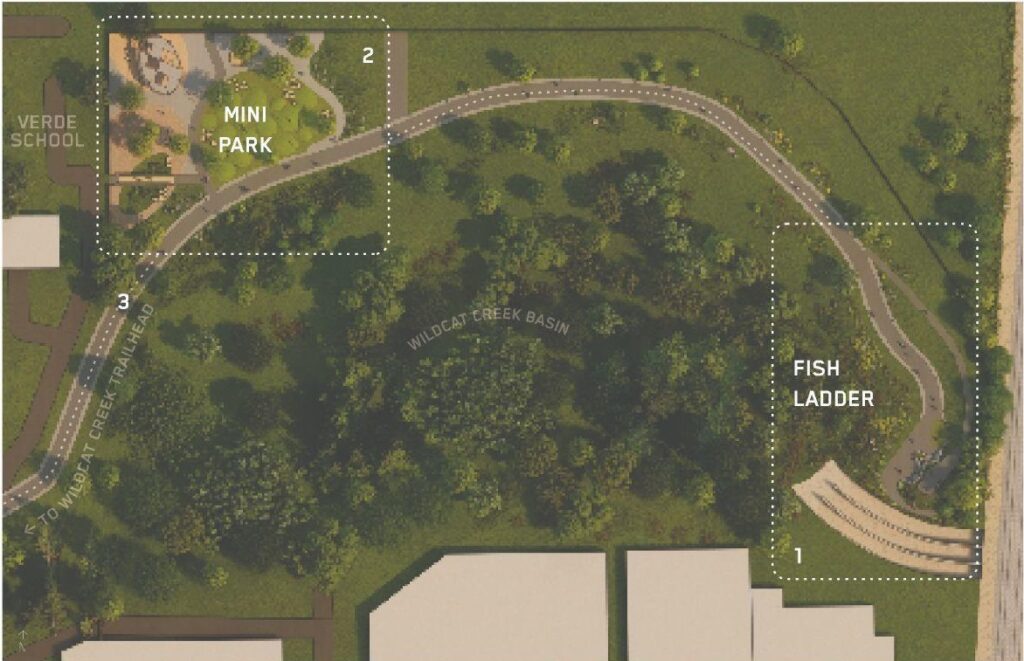
Project Description: A fish ladder built in 1989 within the Army Corps’ 1995 flood-control structure repeatedly fills with sediment and urban debris, becoming a complete barrier to upstream steelhead migration; even when cleared, it no longer meets current CDFW/NMFS passage criteria. It is the most downstream of three significant barriers on lower Wildcat Creek. The project replaces the ladder with a more natural roughened-ramp passage corridor, expands and desilts the downstream sediment basin, and adds training berms and access ramps. The broader Phase 3 scope layers on community amenities and stewardship: two mini-parks (a Fish Passage Overlook and Verde Mini Park), a quarter-mile lit trail connecting Verde Elementary School to the fish ladder, K-12 outdoor education, monthly water quality and citizen-science monitoring, fish habitat mapping, green-jobs workforce training, creek cleanups, and a community-driven Wildcat Creek Action Plan.
Expected Completion: Construction by Contra Costa County FCD began June 15, 2026 and is scheduled to run through November 30, 2026. The associated community engagement, education, and monitoring tasks are funded through September 2026.
Project Effectiveness: Planned evaluation will measure depth and velocity through the new ladder and sediment basin, vegetation establishment in the basin, and community-collected water quality and flow data, building on citizen-science monitoring already underway with Trout Unlimited.