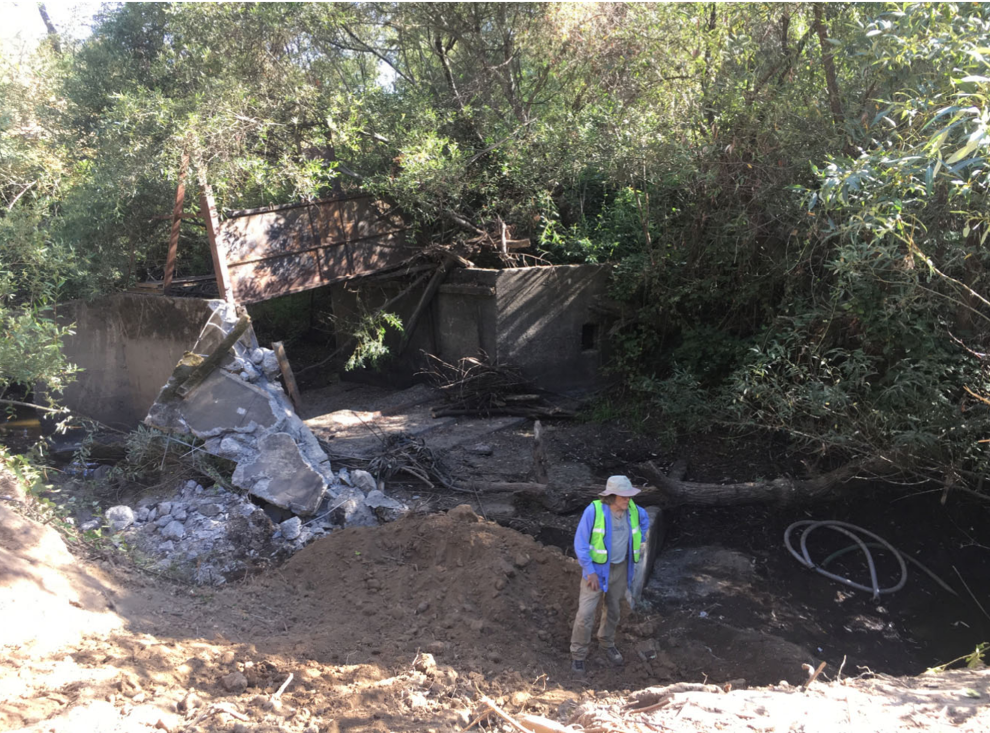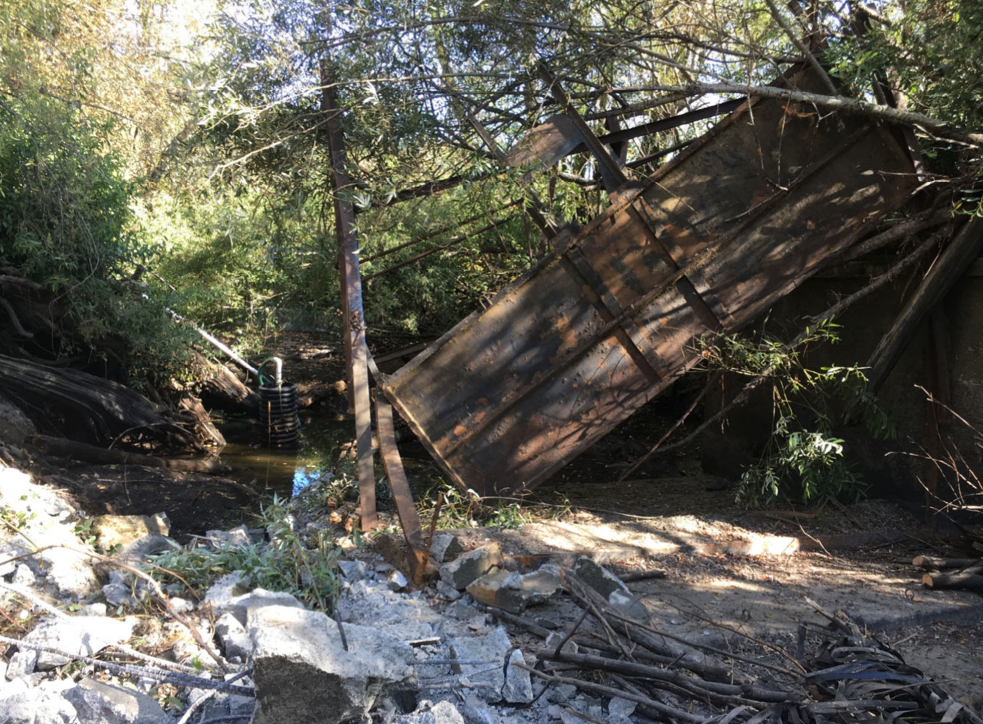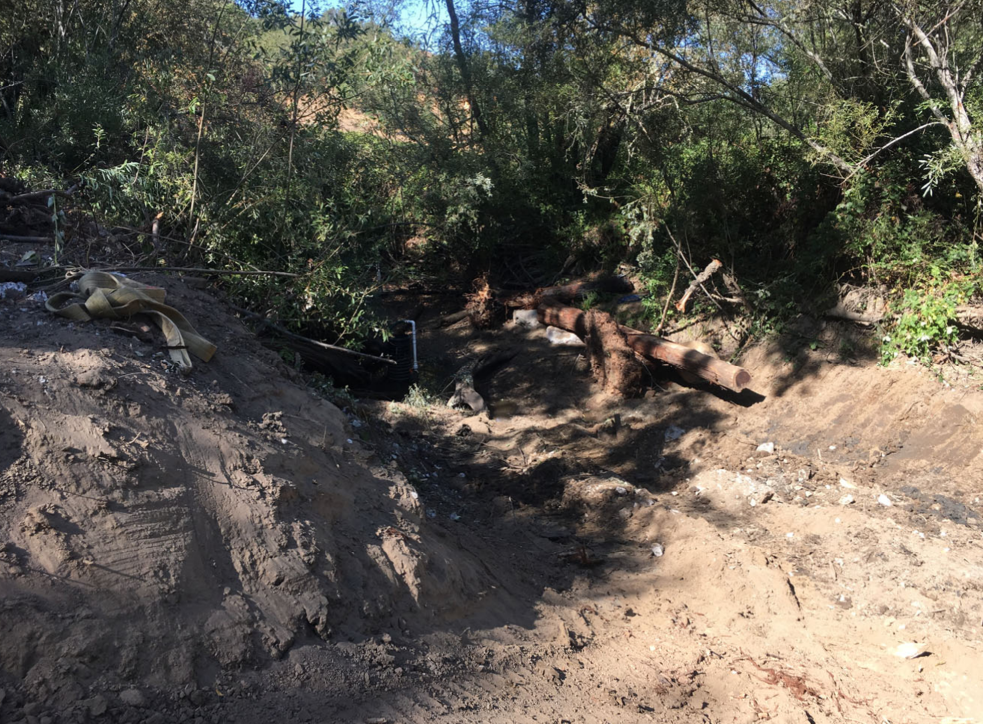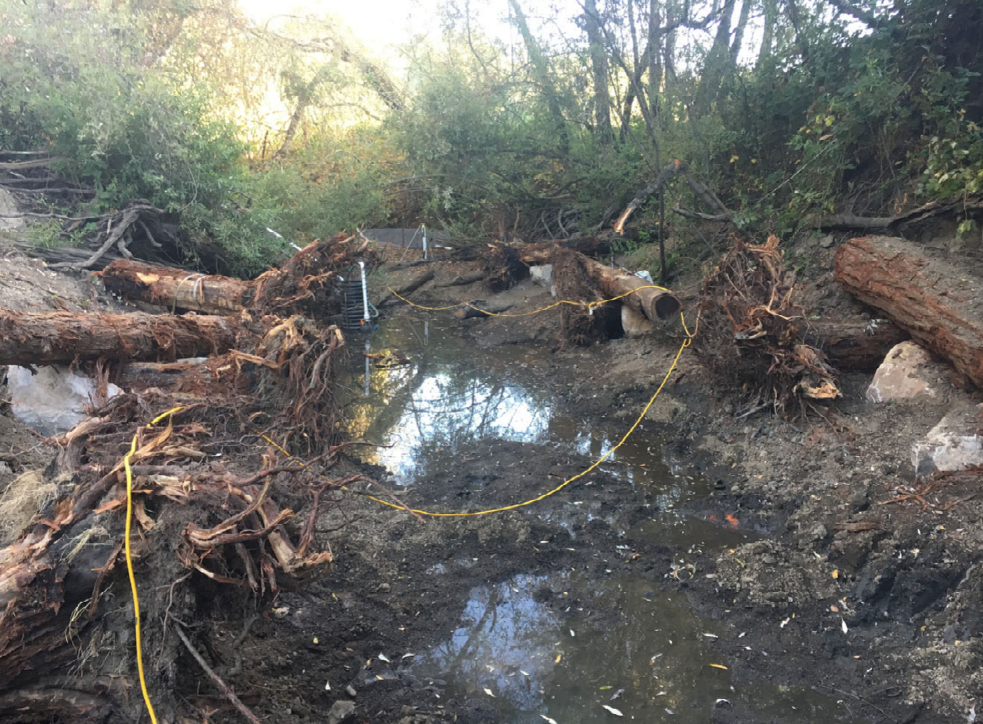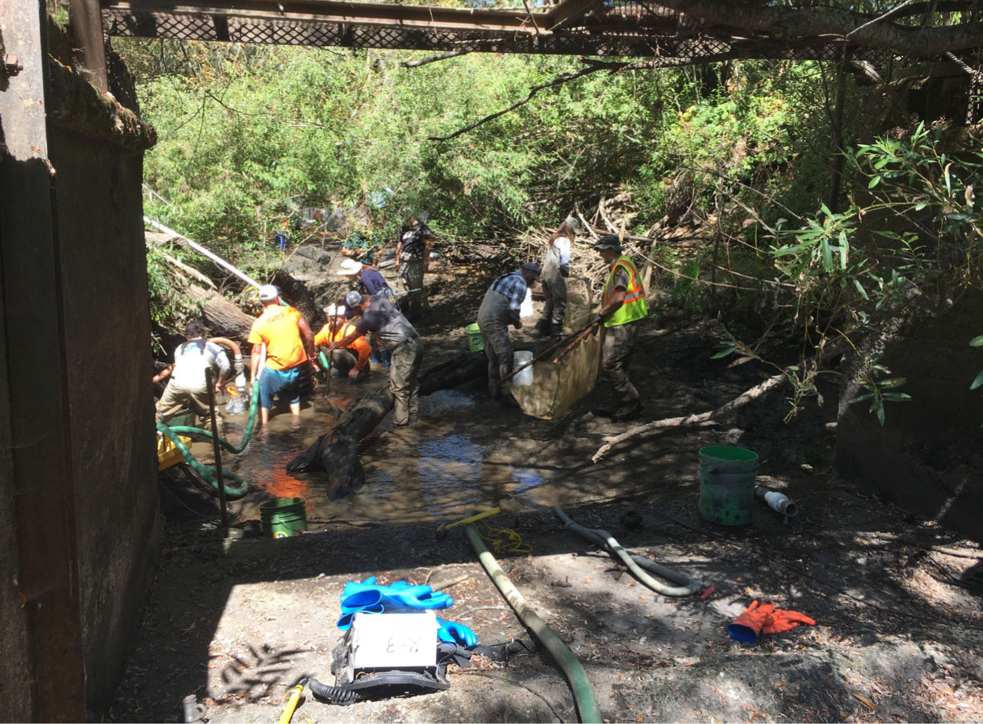
This project removed an obsolete flashboard dam on lower Green Valley Creek at the Iron Horse Vineyards property in Sonoma County — the second of two remnant dams identified as the primary fish passage barriers in the lower creek. Approximately 35 cubic yards of concrete were excavated, banks regraded, large wood habitat structures installed, and willows planted. Removal opened 35 miles of upstream aquatic habitat, benefiting federally endangered Central California Coast coho salmon and threatened steelhead in a watershed that harbored the last documented wild Russian River coho prior to captive broodstock recovery efforts.
Location: Lower Green Valley Creek, on the Iron Horse Vineyards property, Sonoma County, CA. Green Valley Creek is a tributary to the Russian River, which flows to the Pacific Ocean near Jenner, CA. The project reach extends from the former dam site downstream to the confluence with Atascadero Creek.
Historical Fish Presence: Green Valley Creek supports Central California Coast coho salmon (Oncorhynchus kisutch, federally endangered) and steelhead (O. mykiss, federally threatened). Upper Green Valley Creek is of particular significance — it harbored the last documented wild Russian River coho when the Russian River Coho Salmon Captive Broodstock Program began in 2004, and has since consistently produced the largest and most abundant coho smolts in the entire Russian River watershed.
Project Lead: Gold Ridge Resource Conservation District (GRRCD)
Project Partners: California Department of Fish and Wildlife (DFW); California Sea Grant / University of California (monitoring); O’Connor Environmental, Inc. (engineering and water quality); Streamline Engineering (channel design); North Coast Water Coalition; Iron Horse Vineyards (landowner)
CFPF Funding: $20,031
Project Description: The project removed an obsolete flashboard dam on lower Green Valley Creek that acted as a complete fish passage barrier at very low flows, and a significant barrier for juvenile fish at higher flows due to turbulence and shallow water on the upstream concrete apron. The dam was the second of two remnant dams identified as the primary fish passage barriers in lower Green Valley; the first had been removed in 2018 through separate DFW funding. Construction began August 15, 2019. The project reach was dewatered, fish and aquatic species were relocated by qualified biologists, and approximately 35 cubic yards of concrete dam material was excavated and removed. Bank slopes were regraded, large wood habitat structures were installed, disturbed ground was seeded and mulched, and willow sprigs were planted. Removal of this dam opened 35 miles of upstream aquatic habitat to fish passage.
Expected Completion: December 2020
Project Effectiveness: Post-construction monitoring confirmed the large wood structures were stable and functioning as designed, and regraded banks remained stable. The removal of the dam, combined with the 2018 removal of the lower dam, eliminated the primary physical fish passage barriers in lower Green Valley Creek. Extended monitoring revealed that the most significant remaining passage challenge is biological rather than physical: anoxic water pulses from the sediment-impounded Atascadero Creek marsh enter lower Green Valley during storm events, creating potentially lethal dissolved oxygen conditions for outmigrating coho smolts. GRRCD subsequently received design funding to address the Atascadero sediment plug. Monitoring also identified the need for off-channel high-flow refugia habitat, and designs were developed for over 3 acres of new low-velocity rearing habitat on the Iron Horse Vineyards property — nearly triple the area currently available to juvenile fish during winter flows.