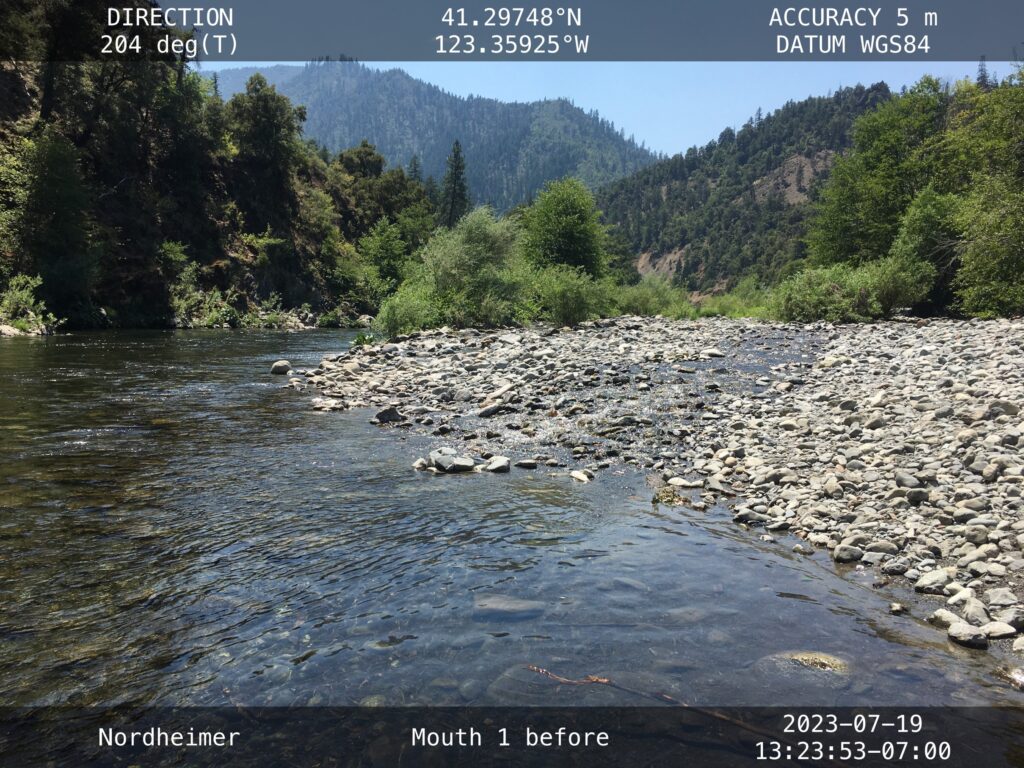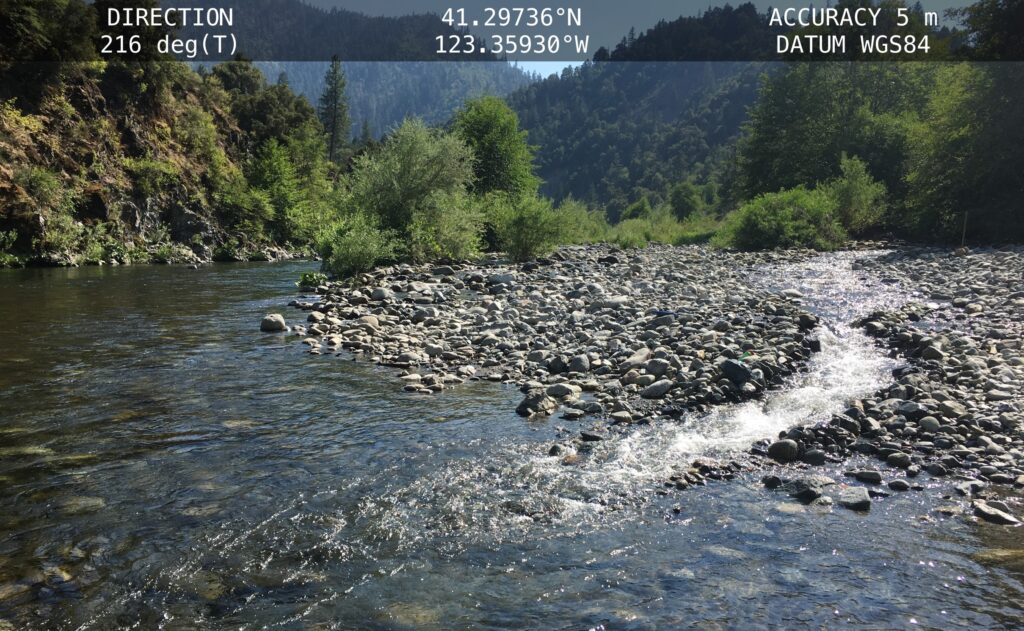
This project annually assessed and manually improved fish passage at the mouths of up to 41 cold water tributaries along a roughly 75-mile stretch of the mid-Klamath River between Weitchpec in Humboldt County and Cottonwood Creek in Siskiyou County, enhancing thermal refugia access for coho salmon, Chinook salmon, and steelhead during critical low-flow summer and fall migration periods.
Location: Mainstem Klamath River tributaries from Weitchpec, Humboldt County (river mile ~143) upstream to Cottonwood Creek, Siskiyou County — a reach spanning portions of Humboldt and Siskiyou Counties on and adjacent to the Klamath National Forest. Work focused on the first 1,000 feet of each tributary at or near its confluence with the mainstem Klamath River.
Historical Fish Presence: The mid-Klamath subbasin historically supported and continues to support coho salmon, Chinook salmon, and steelhead trout. Cold water tributaries provide critical thermal refugia and rearing habitat during the juvenile and adult life stages of salmonids, and access to these habitats during high-temperature summer and fall conditions can arrest the spread of disease and parasites lethal to salmonids.
Project Lead: Mid Klamath Watershed Council (MKWC)
Project Partners: Karuk Tribal Fisheries Program, Salmon River Restoration Council, US Forest Service (Orleans Ranger District; Happy Camp/Oak Knoll Ranger District)
CFPF Funding: $38,680
Project Description: Since 2001, MKWC and partners have maintained an ongoing effort to improve adult and juvenile anadromous fish passage at the mouths of tributaries to the mid-Klamath, Salmon, and Lower Scott Rivers, expanding from a handful of creek mouths to surveying up to 72 creeks in the mid-Klamath for fish passage barriers. Work is conducted manually using hand tools and involves creating step pools, concentrating flow on spread alluvial deltas, building wing dams, channelizing shallow fans to reduce solar heating, and enhancing cold water refugia. Barriers addressed include low-flow perched deltas, high-velocity creek mouths, swimmers’ dams, mining dams, and road crossings. The project is seasonal — treatments are not intended to persist through winter floods but provide immediate, cost-effective passage improvements during the critical summer and fall migration windows. During the reporting period (April–August 2022), MKWC field crews assessed and treated 32 of 40 planned tributaries, with the remaining 8 targeted for completion by end of August. Wildfire ignitions on July 28, 2022 across the Klamath National Forest resulted in evacuations and road closures that temporarily prevented access to Beaver Creek and Horse Creek, along with several monitoring sites.
Expected Completion: Fall 2022
Project Effectiveness: During the summer of 2022, survey crews assessed 41 creeks for migration barriers and improved access to 7.75 miles of cold water habitat for anadromous fish. MKWC identified 16 barriers and treated 14. Of the 41 treated tributaries, over 80% had a documented increase in salmonid presence after treatments occurred. Snorkel surveys were conducted pre- and post-treatment at each site, with 20 monitoring and follow-up visits completed during the reporting period. Youth interns and approximately 15 community volunteers participated in fish passage work at cold water tributary sites.