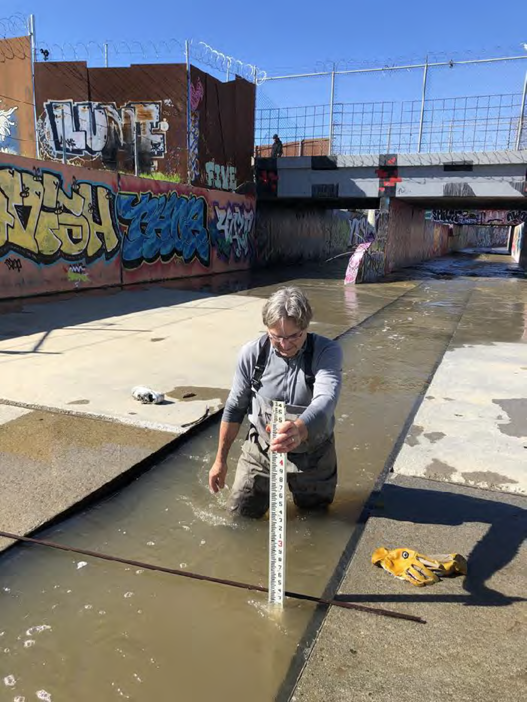
This project conducted an ecological engineering assessment of an existing, chronically clogged fish ladder on Wildcat Creek in the unincorporated North Richmond community of Contra Costa County, developed final design plans for a replacement fish passage facility to improve steelhead access to 1.1 miles of upstream habitat in a creek flowing from the Berkeley hills to San Pablo Bay, and engaged the surrounding disadvantaged community through K-12 educational programming, a children’s book, and community meetings. This is a multi-phase project, with the Forum supporting Phases 1,2 and 3.
Location: Wildcat Creek at the Lower Wildcat Creek Flood Control Channel, in the unincorporated North Richmond community, Contra Costa County. Wildcat Creek drains an 8.8-square-mile watershed from headwaters in the Berkeley hills through Wildcat Canyon — managed largely by East Bay Regional Park District — then flows westward through the urban communities of San Pablo, Richmond, and North Richmond before reaching Wildcat Marsh and San Pablo Bay.
Historical Fish Presence: Wildcat Creek historically supported steelhead trout and threespine stickleback. While not currently a steelhead-producing stream, it holds a resident trout population in the upper watershed and was identified as having strong potential for steelhead restoration. The project site is the downstream-most barrier for steelhead migration on the creek, and its removal was intended to reconnect the headwaters to San Pablo Bay. Central California Coast steelhead are federally listed under the Endangered Species Act.
Project Lead: The Watershed Project, Richmond, CA
Project Partners: Contra Costa County Flood Control and Water Conservation District (facility owner and sponsoring agency), Trout Unlimited – John Muir Chapter, FlowWest Consultants, Wildcat-San Pablo Creeks Watershed Council, California Department of Water Resources (DWR Urban Streams Restoration Program), US Army Corps of Engineers
CFPF Funding: $45,000.00
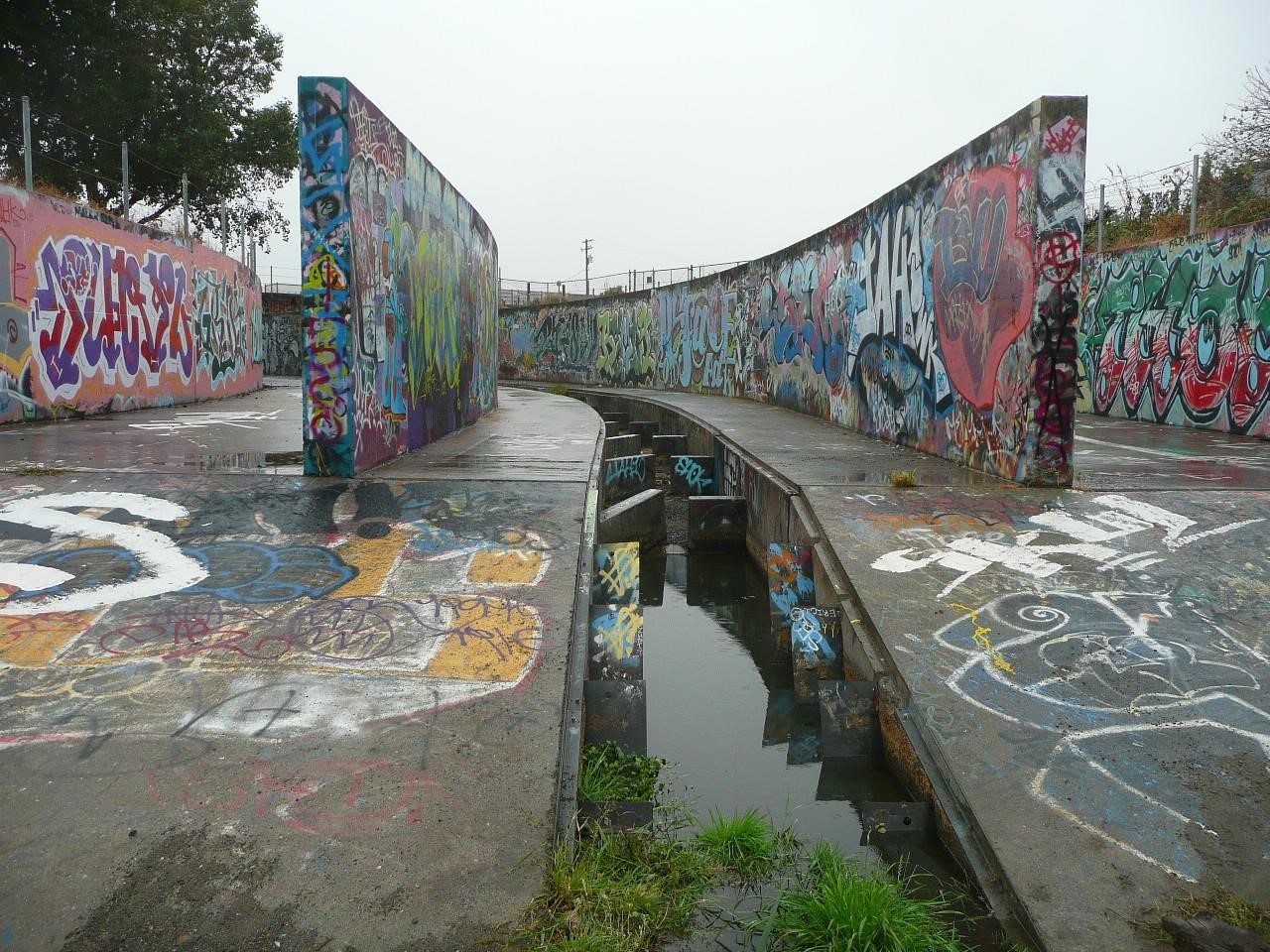
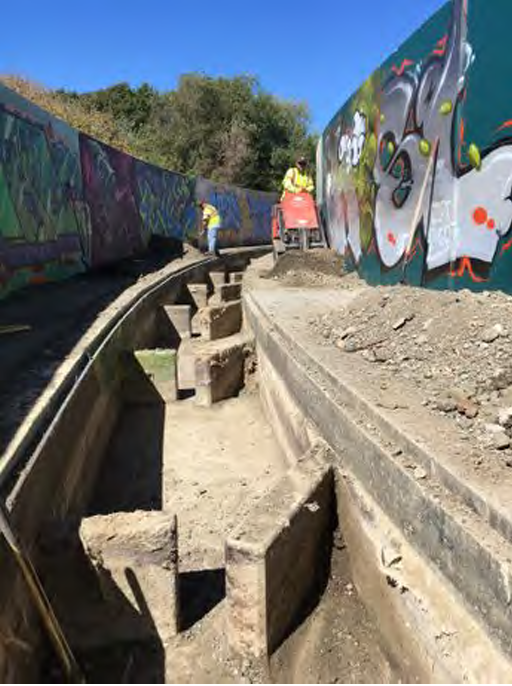
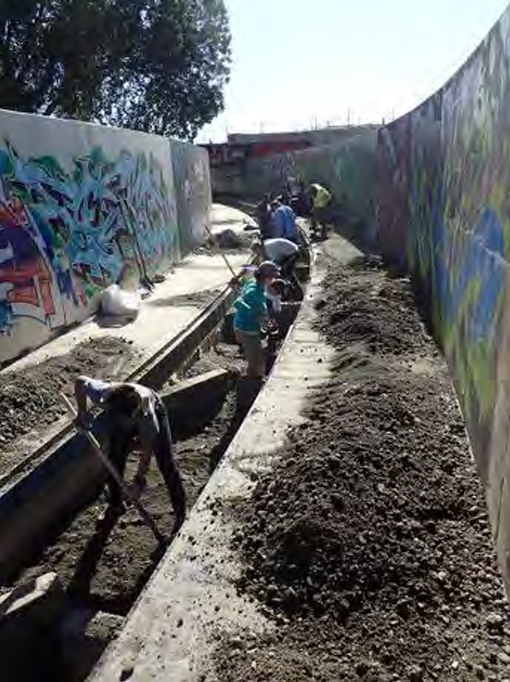
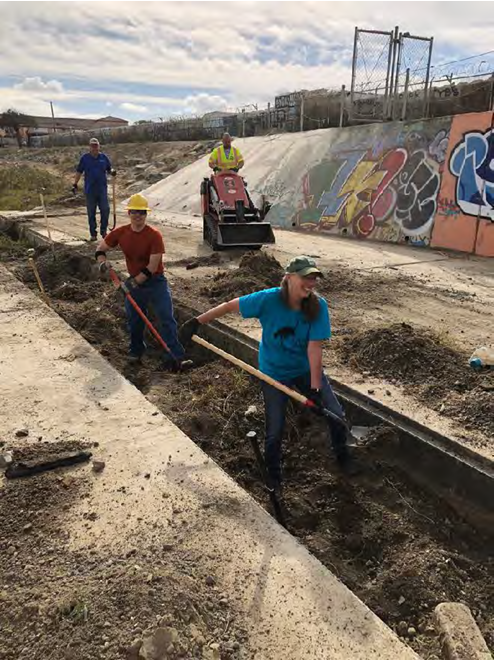
Project Description: The existing Wildcat Creek fish ladder was constructed in 1995 as part of a US Army Corps flood control project and used Washington Baffle design. A 2018–2019 monitoring study by Trout Unlimited confirmed the ladder was chronically clogged by sediment, trash, and debris — rendering it impassable to steelhead during critical migration windows — and concluded that annual maintenance alone was insufficient to keep it functional. A 65% retrofit design had been developed by the Corps and Northwest Hydraulics Consultants (NHC) in 2014, but DWR’s Urban Streams Restoration Program — which was offering $784,000 toward 100% design and environmental compliance — required additional alternatives analysis before releasing funds. CFPF funding supported: an ecological engineering assessment examining alternative bed materials and fish passage slopes using HEC-RAS hydraulic modeling; consultation and permitting coordination with the US Army Corps of Engineers under its Section 408 permit process; and a community outreach program including K-12 school curriculum delivery to 150–200 students, creation of a children’s storybook on watershed connectivity developed with local artists and indigenous community leaders, a project website, and 2–3 community design presentations. Community surveys showed 65% of North Richmond residents described the fish ladder retrofit as “definitely” or “most urgently” needed.
Expected Completion: Fall 2021
Project Effectiveness: As a design and outreach phase, physical fish passage improvements were not part of this scope. Success was measured by completion of engineering technical memoranda, an MOU with the Army Corps of Engineers documenting design modifications and a permitting pathway, delivery of educational programming, publication of the children’s book, and community meeting presentations. Post-construction monitoring of steelhead passage was anticipated as part of later project phases.