On May 28th, the California Fish Passage Forum, partnering with Karuk Tribe, CalTrout, Yurok Tribal Fishieres Department, and Momentum River Expeditions rafted through the footprint of the Iron Gate Reservoir as part of our Steering Committee meeting, which occurs annual at locations throughout California. Twenty-eight river restoration professionals, including engineers, hydrologists, program managers, restoration practitioners, and fisheries biologists put in on the Klamath for a journey through the world’s largest dam removal and river restoration project.
Where the Iron Gate Reservoir once stretched is now a green river valley, with the Klamath sparkling freely below.
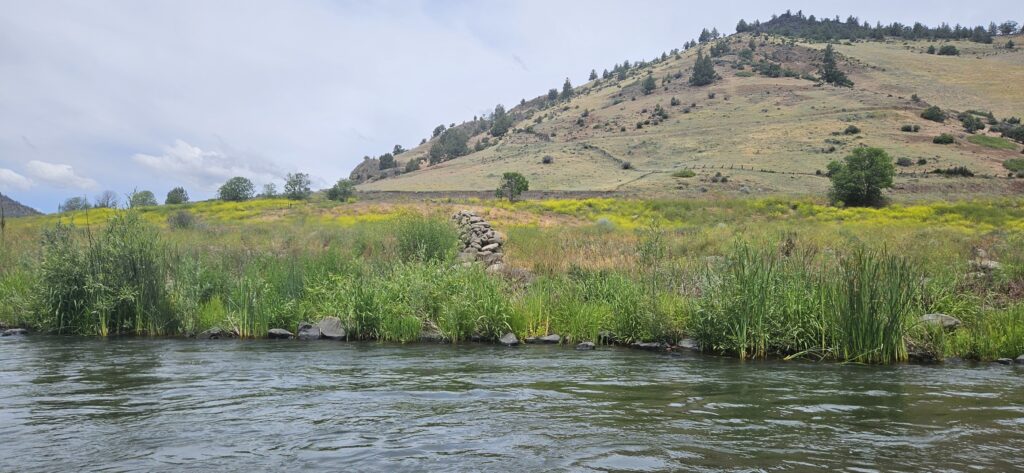
Two years after the removal of Iron Gate Dam in October 2024, native grasses and perennials blanket the former lakebed, thanks to the the incredible daily work of the Yurok Tribal Native Seed Crew, who have been on the ground planting and tending native seedlings every day since the reservoir drawdown began.
The scale of this effort is staggering. The Yurok Fisheries Department’s Revegetation Crew has hand-sown millions of native seeds, planted approximately 76,000 trees, shrubs, and grass plugs, and placed over 28,000 acorns across roughly 2,000 acres of formerly submerged land. The seed blends, curated by Yurok Fisheries Senior Riparian Ecologist Joshua Chenoweth, were designed to mirror the interconnected plant communities that existed in the Upper Klamath before dams and colonization altered the landscape.
“Our seeds are part of a legacy that I can leave behind. Our grandchildren will be able to see what we planted here.”
– Onna Joseph, Yurok restoration technician
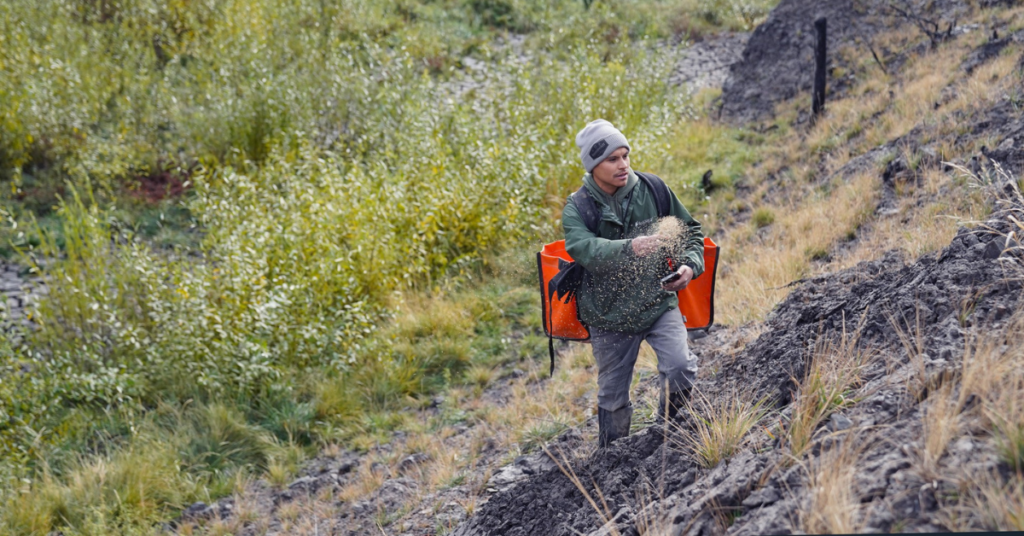
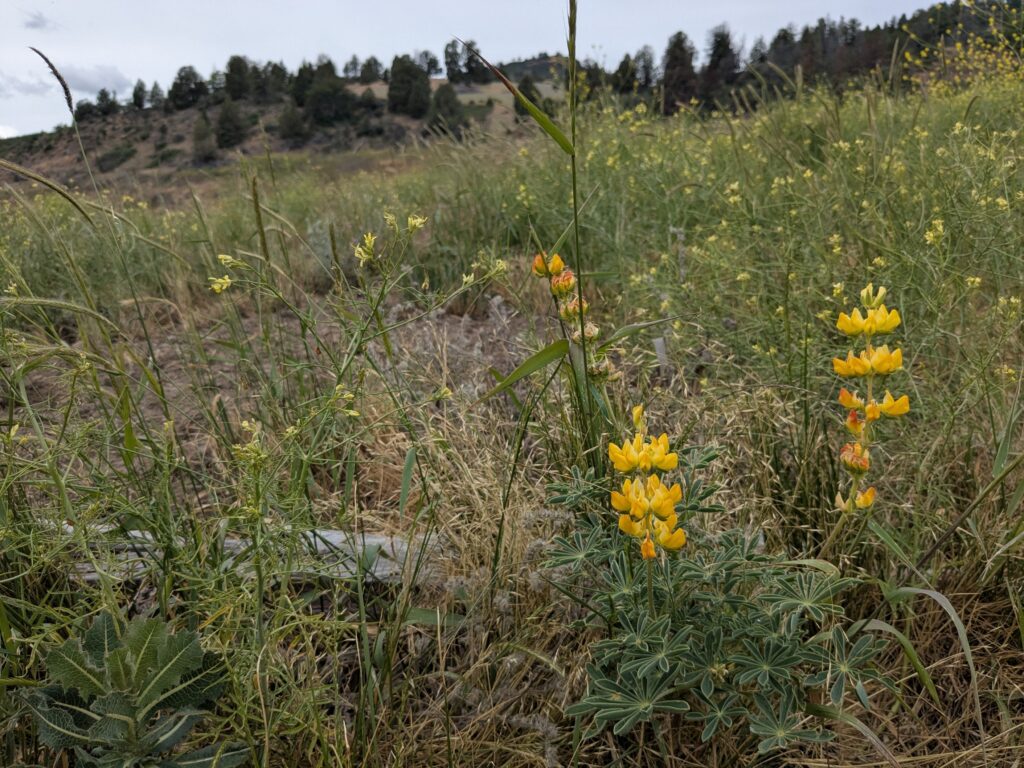
(above) Stanley McCovey – Yurok Fisheries Department Revegetation Crew Member
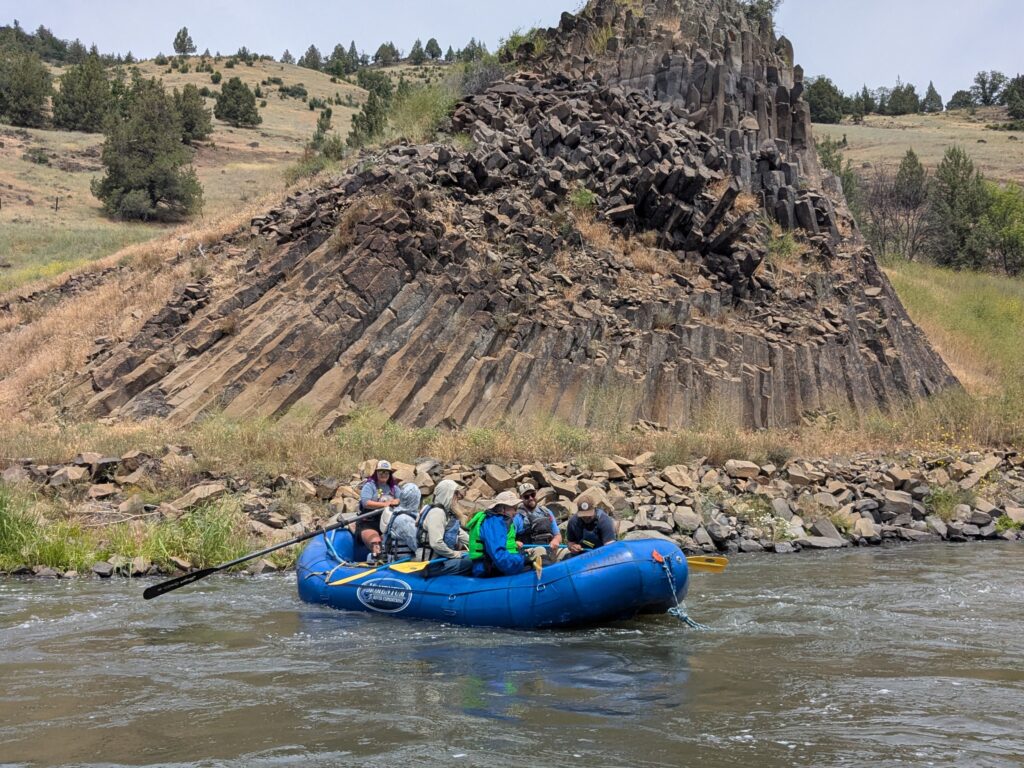
Moving downstream on the river, natural formations of basalt columns rose from the riverbanks. Tree stumps, old rock walls, stone foundations, and the remnants of homestead sites were now visible, having been underwater since Iron Gate Dam was first built in 1961. Along the margins of the former reservoir, dense silt is still present at the water’s edge. Willows and riparian shrubs are rapidly colonizing these banks, with red-winged blackbirds, western pond turtles, and other riparian wildlife making a home in the new habitat.
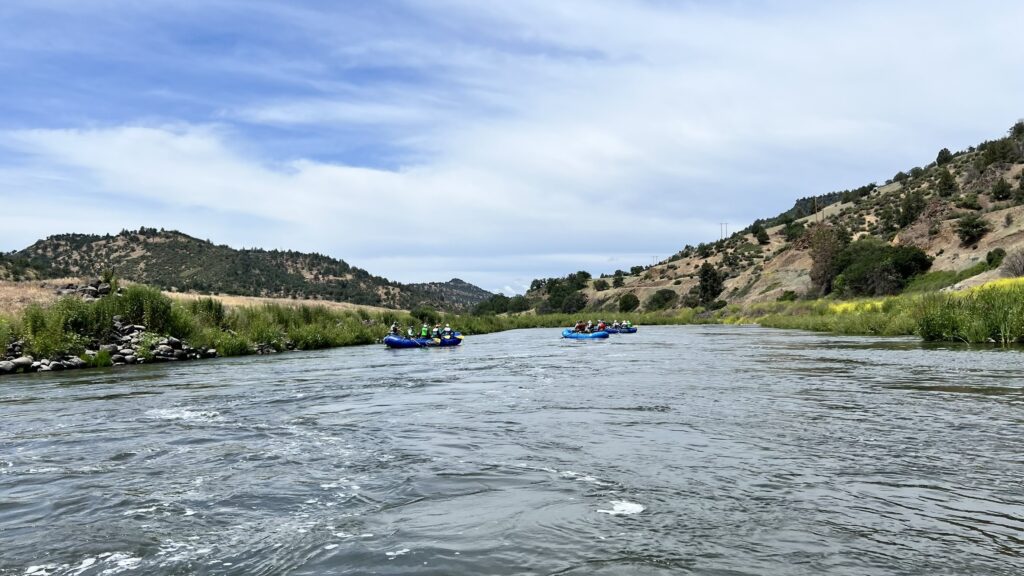
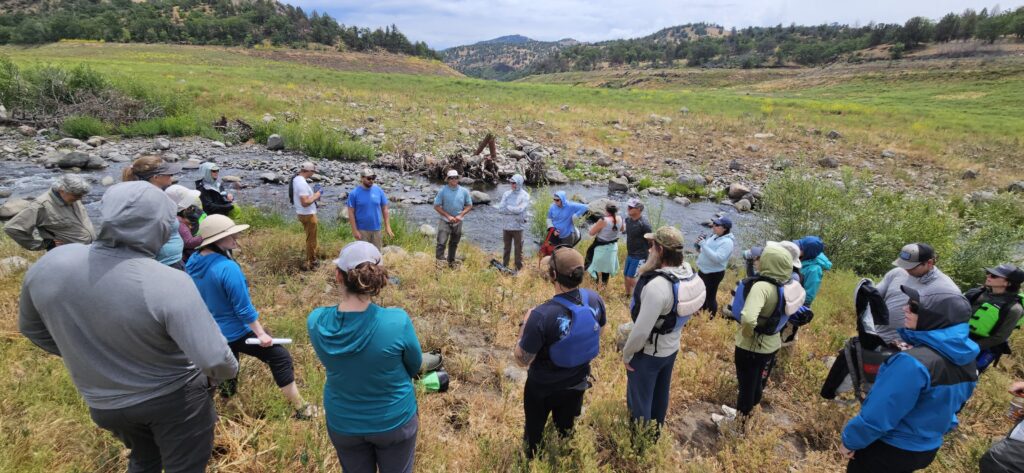
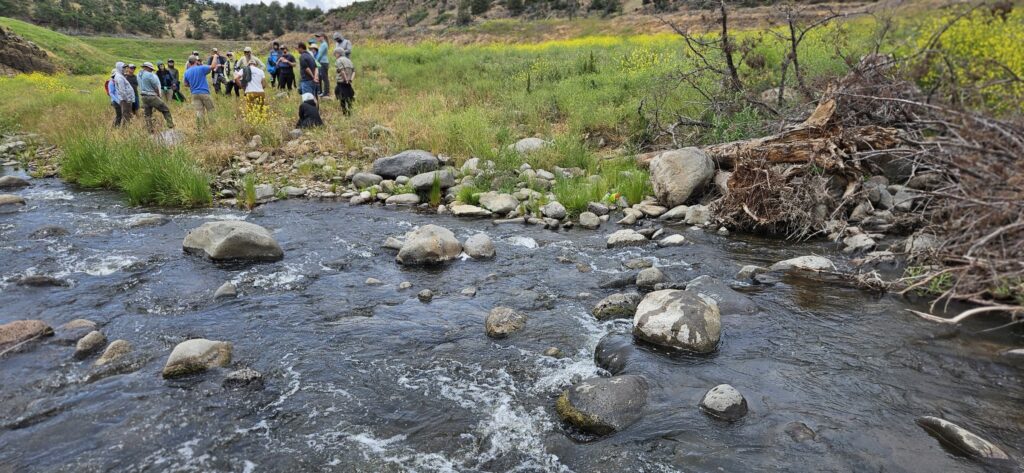
The group stopped for lunch at Jenny Creek, where Aaron Martin and Max Ramos of the Yurok Tribal Fisheries Department presented on their work helping the major tributaries find their way back to the Klamath through the dewatered reservoir footprint.
Tributaries like Jenny Creek and Cache Creek didn’t simply flow back to the river on their own. Restoration crews had to take their cues from the creeks themselves, scraping away accumulated reservoir silt, and loading the channels with large woody debris to create the complexity and habitat structure for spawning salmon. This tributary work is part of a broader $18 million NOAA-funded initiative led by the Yurok Tribe, which will restore Shovel Creek and other tributaries between Jenny Creek and Spencer Creek in Oregon — creating approximately 150 acres of prime fish and wildlife habitat through fish passage improvements, floodplain reconnection, side channel construction, and stream habitat diversification. The California Fish Passage Forum also funded the removal of a low-head dam on Jenny Creek in 2024.
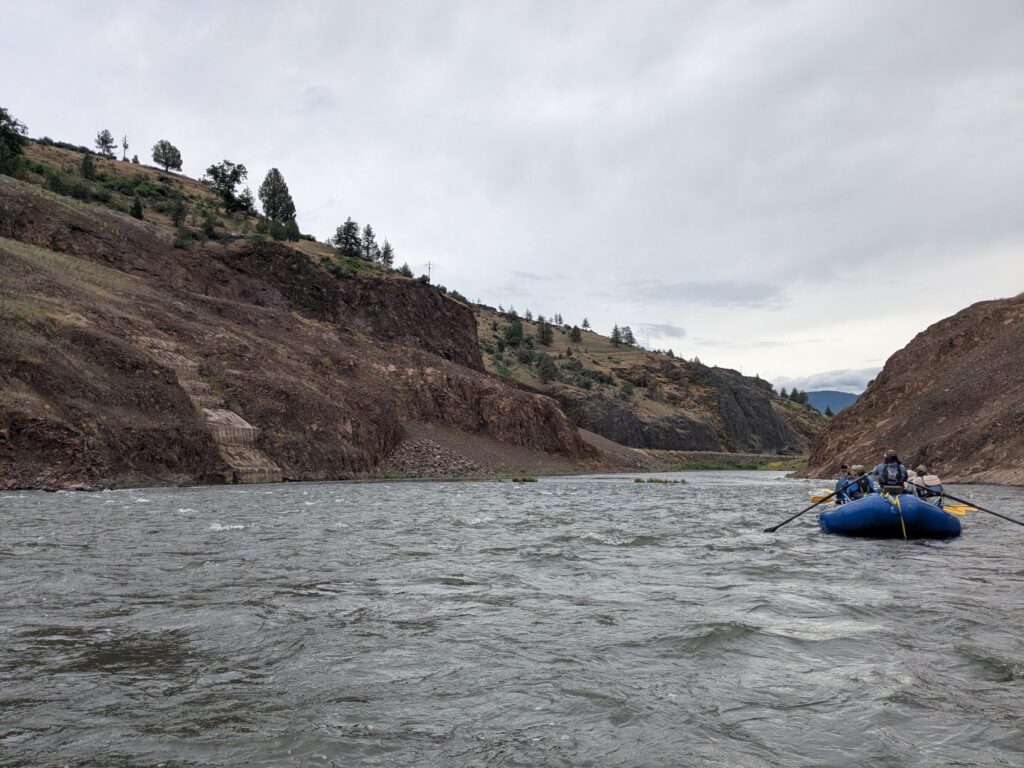
As we paddled to the end of the reservoir footprint, the canyon walls closed in. Rounding the final bend, the core of Iron Gate Dam is still visible, embedded in the hillside on both banks.
And yet paddling through the gap where the dam once stood felt almost anticlimactic. The river doesn’t stop or falter, it flows freely, almost as though the dam was never there. The Klamath River has returned to its historic channel, guided by bathymetry that was buried under sediment for generations but never truly erased.
The ecological response has been swift and profound. Between October and December 2024, just months after dam removal, over 7,700 fish passed through the former Iron Gate Dam site, with Chinook salmon making up approximately 96% of those returning upstream.
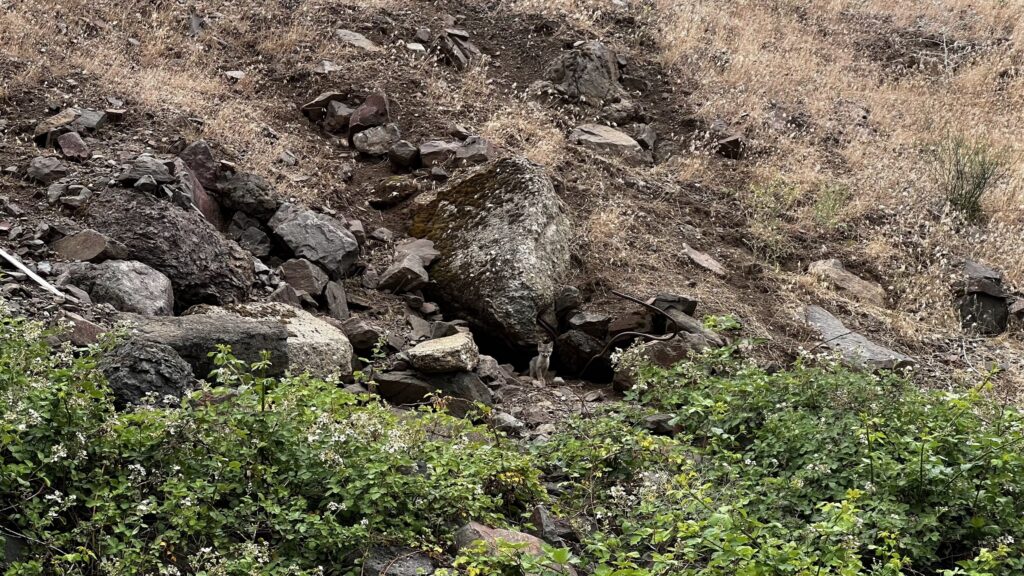
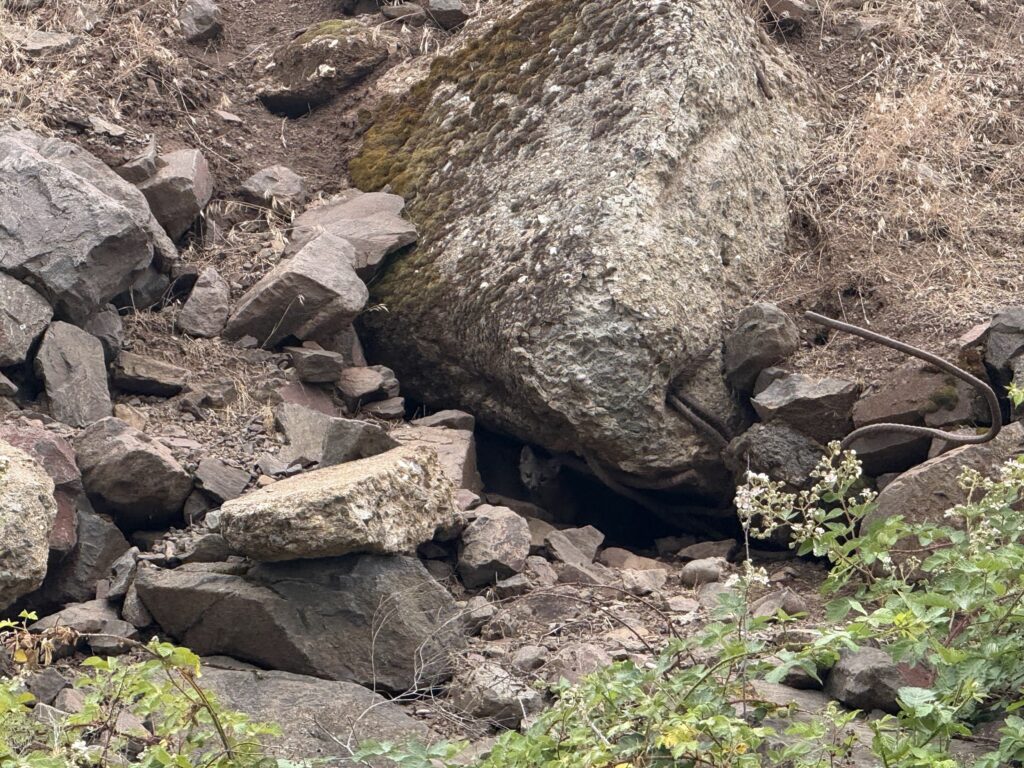
No moment from the day captured the spirit of the Klamath’s recovery more than an unexpected wildlife encounter. Less than 200 feet downstream from the dam removal site itself, beneath a large concrete-and-rebar boulder, a fox kit emerged from its den.
Upstream, major initiatives are underway to improve the upper Klamath Basin.
- The Upper Klamath Basin restoration includes large-scale wetland reconnection projects, including the Barnes-Agency wetland initiative on the Upper Klamath Wildlife Refuge, which will transform thousands of acres into diverse wetlands supporting native fish and migratory birds. Phases 2 and 3 of this project are set to break ground in 2026, returning Fourmile and Sevenmile Creeks to their historic channels.
- The Yurok Tribe’s Upper Klamath River Tributary Post Dam Removal Salmonid Restoration Project will continue its five-year mission to rebuild salmon habitat across the newly accessible reach, in partnership with four upper basin tribes and two conservation organizations.
- The ambitious “Big Swing” project would restore portions of the Sprague River by removing Army Corps of Engineers levees and allowing the river to return to a more natural course — addressing one of the basin’s largest remaining sources of nutrient pollution.
For a comprehensive view of where the restoration stands and where it is headed, see the Klamath River Renewal Corporation’s project page and NOAA Fisheries’ Upper Basin restoration planning resources.
The California Fish Passage Forum convenes river restoration professionals across California to advance the science and practice of restoring fish passage and watershed connectivity.
- Klamath River Renewal Corporation — The Project
- American Rivers — Klamath Dam Removal Overview
- Yurok Tribe — Revegetation Project
- NOAA Fisheries — Upper Basin Restoration Plan
- OPB — One Year After Dam Removal: Ecosystem Booming
- OPB — Upper Klamath Basin Wetland Restoration
- NASA Earthdata — Satellite View of Dam Removal