This project restored connectivity between Seiad Creek and three previously constructed off-channel ponds — Alexander, Stender, and Durazo — in Siskiyou County, California, a tributary system of the Klamath River. By removing sediment blockages and installing wood and rock structures to redirect flow, the project improved access to 19,000 square feet of critical off-channel rearing habitat for ESA-threatened Klamath River Coho salmon, Chinook salmon, and steelhead, where off-channel winter habitat is a documented limiting factor in salmonid recovery.
Location: Seiad Creek, a tributary to the Klamath River, in the Seiad Valley area of Siskiyou County, California. Three off-channel pond sites: Alexander Pond, Stender Pond, and Durazo Pond, located along the lower reach of Seiad Creek within the Mid Klamath subbasin.
Historical Fish Presence: Seiad Creek supports one of the few remaining relatively stable Coho salmon populations in the Mid Klamath subbasin. The creek and its off-channel habitats historically supported Central California Coast (CCC) Coho salmon (ESA threatened), Chinook salmon, and steelhead trout. Off-channel winter rearing habitat has been identified by multiple studies as a key limiting factor for Klamath watershed Coho populations. A natural waterfall approximately 3 miles upstream of Alexander Pond forms an impassable barrier for both juvenile and adult salmonids, defining the upper limit of the accessible habitat.
Project Lead: Mid Klamath Watershed Council (MKWC)
Project Partners: Karuk Tribe / Karuk Tribal Fisheries Program
CFPF Funding: $28,855
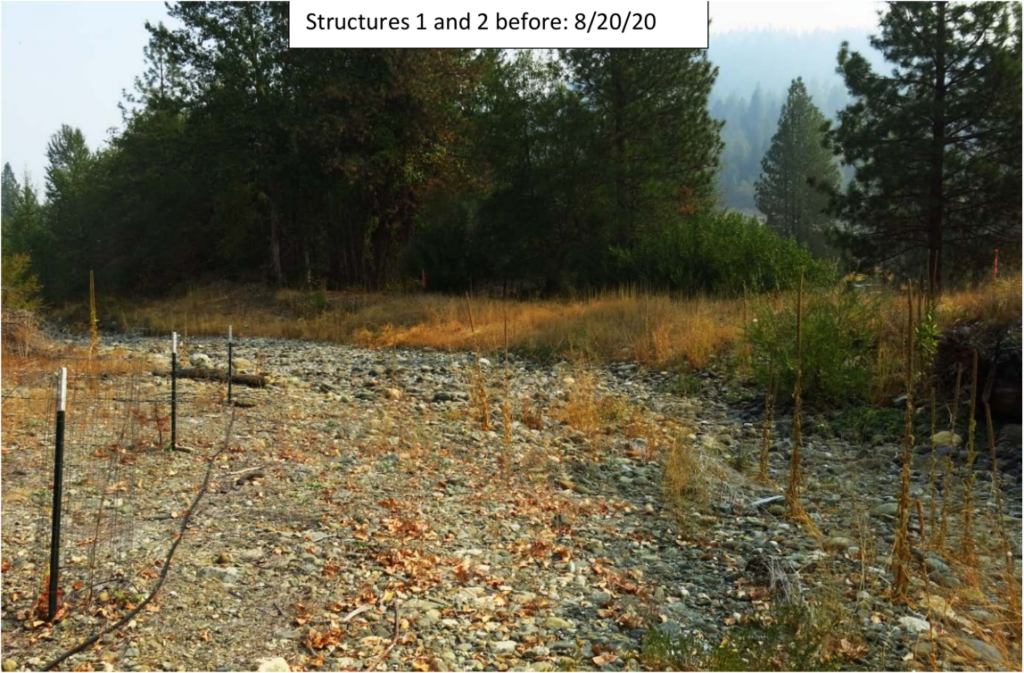
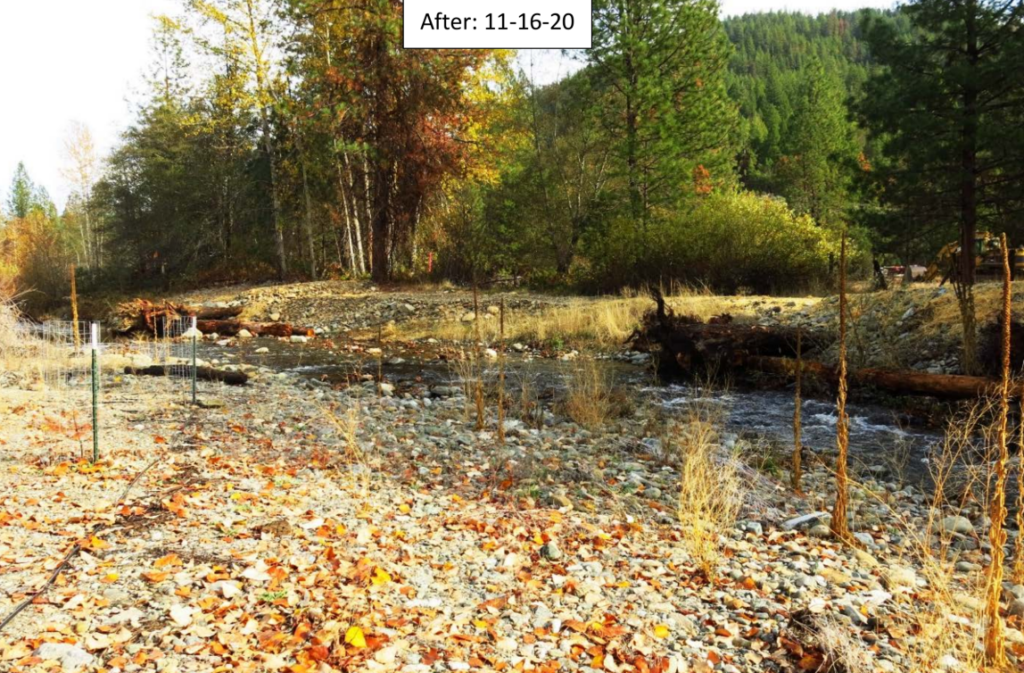
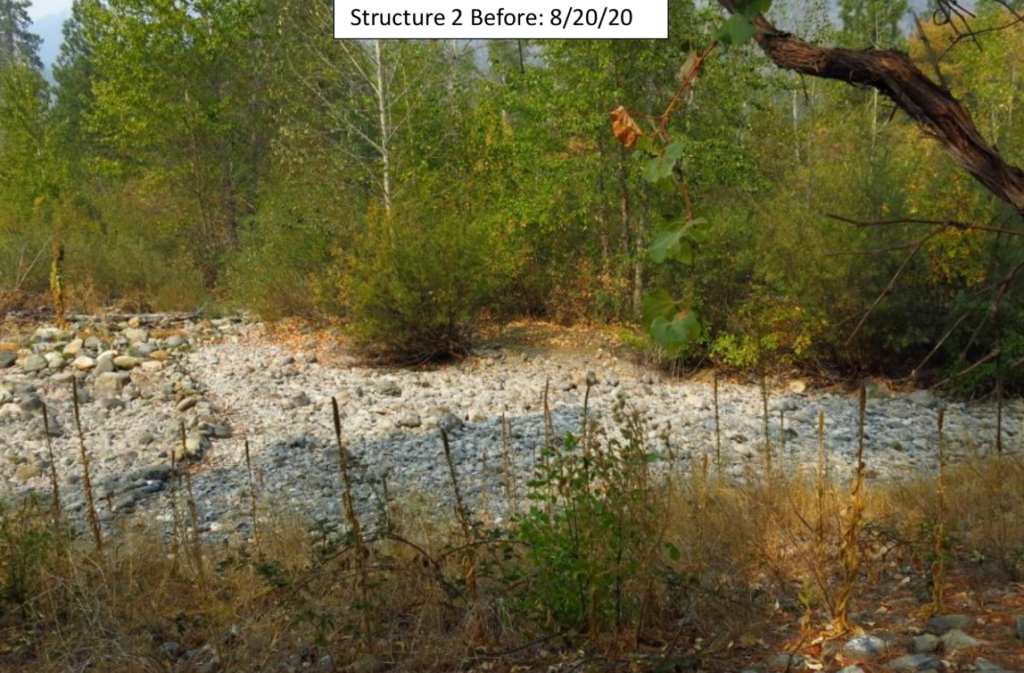
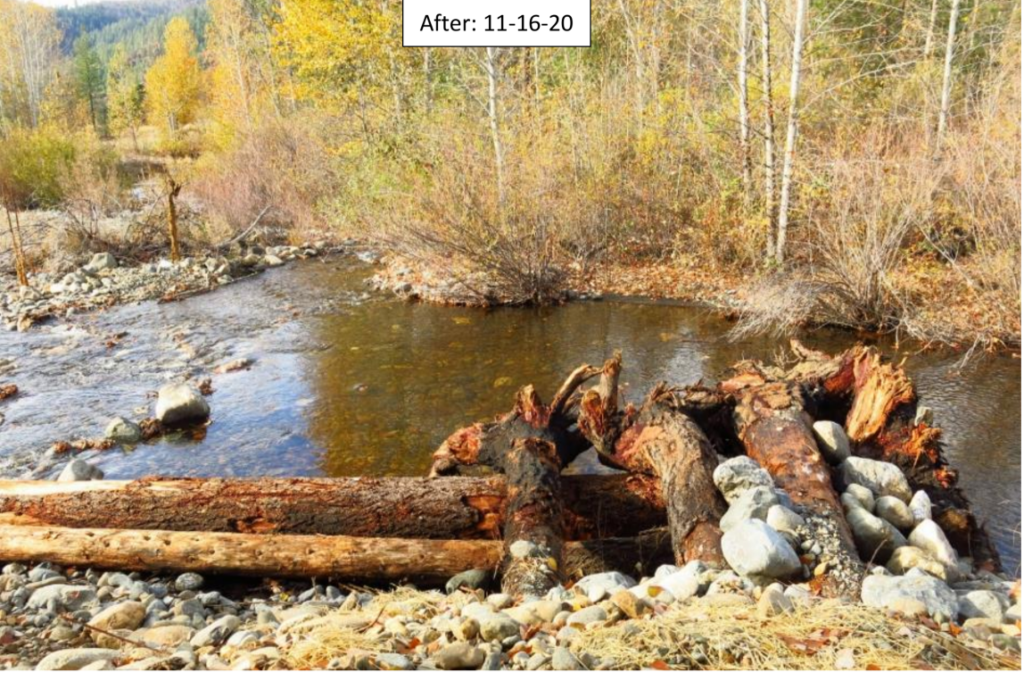
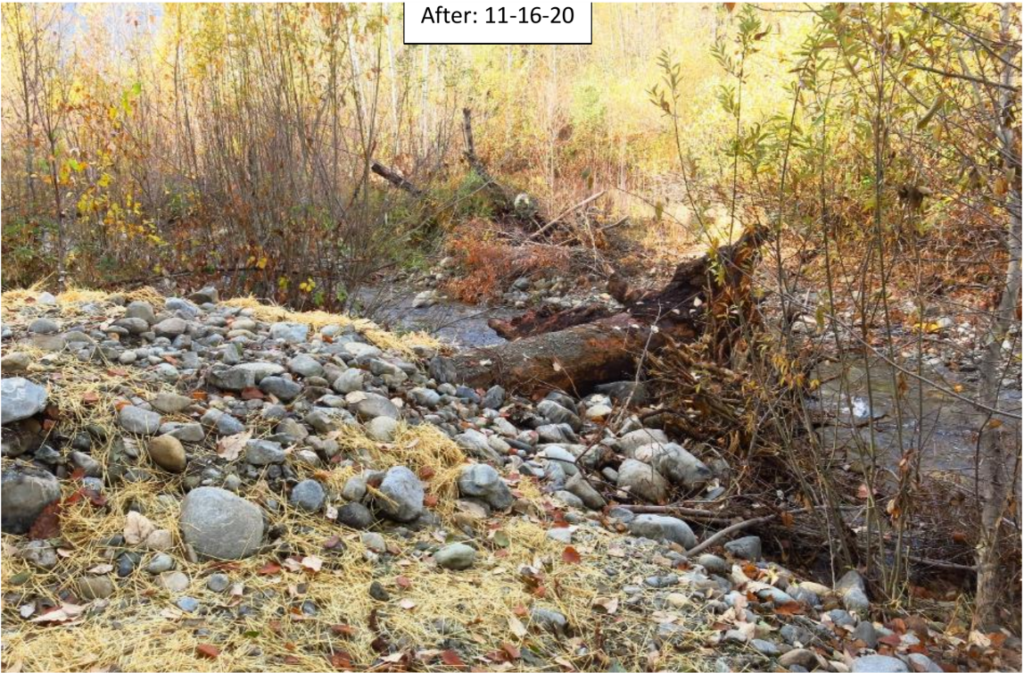
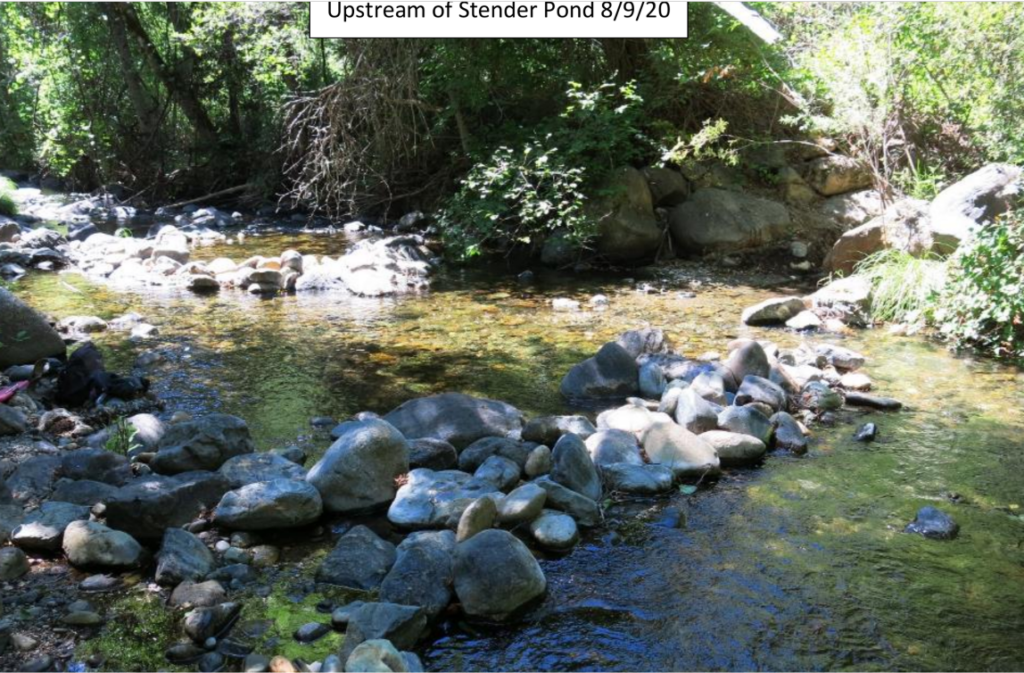
Project Description: The three target ponds — Alexander (constructed 2010/2011), Stender (2010/2011), and Durazo (2014) — had experienced degraded or severed connections to Seiad Creek due to post-fire sedimentation and channel reconfiguration. The project addressed each site individually: at Alexander Pond, sediment was hand-excavated from the egress channel and a rock wing dam was installed to shift the connection angle from 90° to 50° downstream, reducing future sediment deposition. At Stender Pond, the egress channel was excavated and widened, a vortex weir was installed downstream to create a pool and reduce high-flow velocity, and a wing dam was added to direct the thalweg toward the outlet channel. At Durazo Pond, three large engineered wood structures using 12 trees with rootwads were installed in the mainstem to back up water into side channels, two side channel sills were lowered to extend connectivity duration, and 107 native trees and shrubs were planted along 950 feet of riparian streambank.
Expected Completion: Winter 2020–2021. Final report submitted January 25, 2021.
Project Effectiveness: Post-project monitoring documented significant improvements at all three sites. At Alexander Pond, average channel depth increased from 0.15 feet to 1.0 feet at base flow; snorkel surveys recorded a jump from 45 juvenile Coho pre-project (June 9) to 311 juvenile Coho post-project (December 4). At Stender Pond, average winter base flow depth increased from 0.18 feet to approximately 1.5 feet. At Durazo Pond, both side channels achieved connectivity during average high water flows — a marked improvement over prior years when connection only occurred briefly at peak flows. Overall, the project improved passage to 19,000 sq. ft. of off-channel pond habitat, opened 2,200 sq. ft. of floodplain habitat, and added 310 sq. ft. of salmonid cover along lower Seiad Creek. Ongoing monitoring includes photo monitoring, snorkel counts, and connectivity duration assessments.